Articles

Suburban ponds provide important ecological, water quality, and recreational benefits. Unfortunately though, they are often susceptible to degradation from stormwater runoff, sediment accumulation, and declining habitat quality. Over time, one Massachusetts pond experienced significant sedimentation, reduced water quality, and diminished ecological function, prompting a long-term restoration effort.
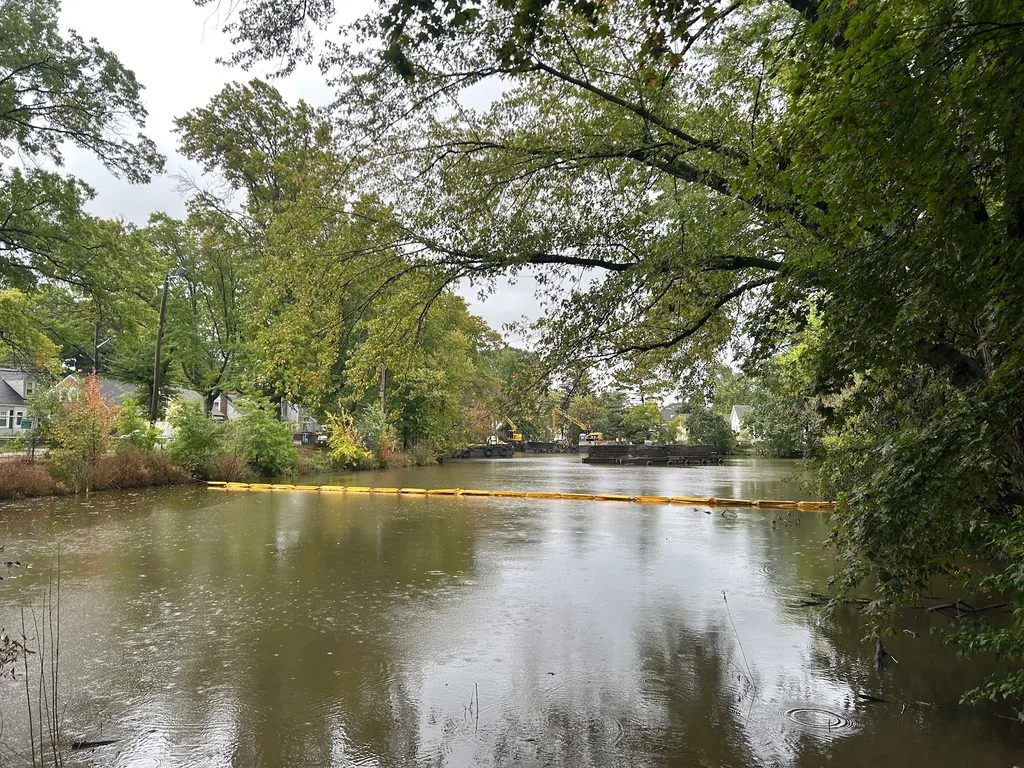
The degraded pond, Sailors Home Pond, is a 1.7-acre, freshwater pond in Quincy, Massachusetts that sits about a quarter mile from the Atlantic Ocean. The name comes from the National Sailors’ Home, a former US Navy veterans’ facility, reflecting Quincy’s long history and maritime heritage. As one of only two freshwater ponds in the city that are easily accessible to the public for passive recreation, the pond has narrow banks and shores and is located in a small open space area. The surrounding land is a densely developed residential neighborhood and roadways surround three sides of the pond, which was last dredged over 50 years ago.
The City of Quincy undertook several steps between 2016 and 2026 to restore Sailors Home Pond. Their planning and restoration efforts began with pond assessments and characterization. With an understanding of pond conditions and area drainage, the city, with support from their consultant Weston & Sampson, identified various rehabilitation and dredging strategies and alternatives. Starting in 2016, the project team advanced permitting, coordinated with stakeholders, and secured state grant funding. Once approvals were obtained, a public bid design was issued and the city carefully managed construction. The dredging program removed accumulated sediments, restored aquatic habitat for native turtle species and others, and improved the pond’s long-term resilience. The completed project transformed the pond into a healthier and more accessible community resource. A new observation overlook provides opportunities for education and passive recreation while allowing visitors to experience the restored pond and surrounding habitat in a new way.
The project culminated in a May 2026 community turtle release event, symbolizing the ecological improvements achieved through years of planning, funding, permitting, and construction. The restoration demonstrates how a sustained, multidisciplinary approach can successfully revitalize degraded urban water resources and generate lasting environmental and community benefits.
The Challenges
The pond’s condition had slowly and significantly deteriorated over the years, reducing its irreplaceable value as an ecological, recreational, and educational asset. Even though area residents could walk around or sit by the pond, it no longer supported a viable fish population due to the anaerobic conditions. Local residents even noted that what they once referred to as a “symphony of frogs” was no longer heard. Even though there was still a population of painted and snapping turtles, the same residents also said they did not see them nearly as often as they used to, indicating poor habitat quality and a severely stressed aquatic ecosystem in and around the pond.
In addition, non-native invasive plants like common reed (Phragmites) and purple loosestrife (Lythrum salicaria) had become firmly established and had expanded around the pond, outcompeting native plants. Algae blooms frequently blighted the pond throughout the growing season, resulting in an unpleasant pea green color and significantly reduced water clarity. In fact, little to no beneficial aquatic vegetation remained in the pond and sediment and debris clogged the pond bottom, decreasing the space available to receive stormwater runoff and severely impacting water quality.
The pond’s poor health was directly linked to runoff and inputs from the surrounding watershed and landscape, including the five stormwater outfalls that discharged to the pond. Sediment from road runoff, pet waste, fertilizers, trash, automotive fluids, and other pollutants from within the pond’s 11.5-acre watershed routinely ended up flowing into the pond during rainfall events or snow and ice melt. And with no natural inlets or outlets, the pond faced further eutrophication.
Developing a Solution
The city had previously expended considerable time, effort, and funding to address the pond’s water quality issues and improve its ecosystem, which, while meaningful, did not address the significant accumulated sediment. The city had encouraged community clean-ups, banned the feeding of waterfowl, and put in place various maintenance strategies like pollutant management, seasonal pond aeration, and chemical treatments. Any noticeable improvements, however, were temporary and limited due to the pond’s degraded conditions. The pond’s health continued to decline largely due to the accumulated sediment and organic matter and excessive nutrient load. Because Sailors Home Pond has no outlet, suspended solids in stormwater entering the pond remain in the pond and accumulate over time. Periodic maintenance dredging is therefore required to remove these accumulated sediments. The only truly viable solution was a full pond dredging to provide long-term, durable improvement, so the city set out to further plan, fund, design, permit, and implement the project.
Implementing the Solution
The first step of the comprehensive dredging was planning. Weston & Sampson performed a preliminary review of the pond and completed an ecological assessment. A bathymetric survey of the pond was also completed to assess the depth of accumulated soft sediment requiring dredging and to evaluate the physical and chemical qualities of the sediment.
The results from sediment coring, which showed that there was up to eight feet of soft sediment at the bottom of the pond, and sieve analyses helped inform the dewatering planning. Chemical analysis was also performed to help determine the potential recycling or disposal options for dredged sediment following the appropriate Massachusetts Department of Environmental Protection criteria.
Chemical analysis found elevated concentrations of metals, petroleum, polycyclic aromatic hydrocarbons, and pesticides, which are commonly found in suburban to urban residential areas and stormwater runoff. The presence of these contaminants meant that the dredged sediment would require out-of-state disposal, and since up to 8,300 cubic yards of sediment would require dredging, the handling, transportation, and disposal costs were expected to be significant.
Using $3 million in capital funding, the city and Weston & Sampson set about developing a project scope. That scope included dredging the entire 74,000+ square feet of the pond bottom and modifying the local stormwater infrastructure through retrofit best management practices (BMPs). The city also applied for and was awarded a $1 million grant from the Massachusetts Executive Office of Economic Development as part of their FY25 Inland Dredging Pilot Round of the Massachusetts Dredging Program. In addition, the city’s Department of Natural Resources sought and received additional funding to cover the remaining costs to complete the dredging and restoration project to rehabilitate and fully restore the pond.
The subsequent project implementation phase included:
- site preparation
- dredging
- dewatering operations
- removal and disposal of dredged material
- invasive species management
- post-construction upland restoration
- plantings
- stormwater management improvements
- educational and interpretive signage
Making Things Right
Once the dredging contractor was selected but before the bulk of the site work began, a team of ecologists, wildlife experts, and volunteers set about to capture as many of the turtles in the pond as they could find so they could be “re-homed” while dredging activities took place. The New England Wildlife Center, a local animal rescue facility, stepped up to temporarily house and provide veterinary and other care for the turtles. The turtle capture and temporary relocation was overseen and permitted by the Commonwealth of Massachusetts, Department of Fish and Game. Project setup involved the assembly of floating scows for the excavator and sediment storage, with the scows located around the pond as dredging activities progressed and for sediment off-loading. An additional excavator was located on a platform on the south end of the pond to assist with loading sediment from the storage scows into trucks for removal. Proper environmental controls were installed around the site, including straw wattles, tree protection, and silt sacks. Within the pond itself, a turbidity curtain was installed to isolate the active dredging areas from the rest of the pond.
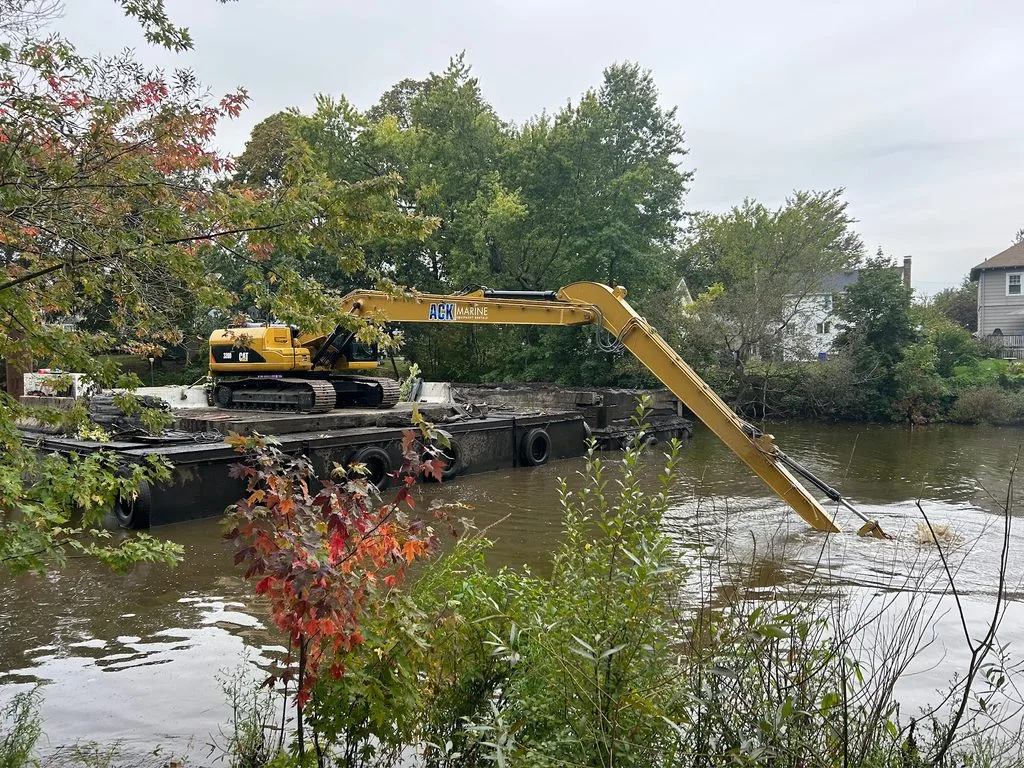
Dredging operations were performed using an excavator mounted on a mobile scow with live sensors to assist with proper bathymetric grading. All dredged material was trucked off-site to a city laydown area where the sediment was mixed with a sugar cane-based dewatering agent known as “bagasse” before it was relocated to an off-site landfill for daily cover. The dredging contractor phased the work to minimize any impacts to inactive construction areas of the pond and limited the migration of turbid water with the turbidity curtains.
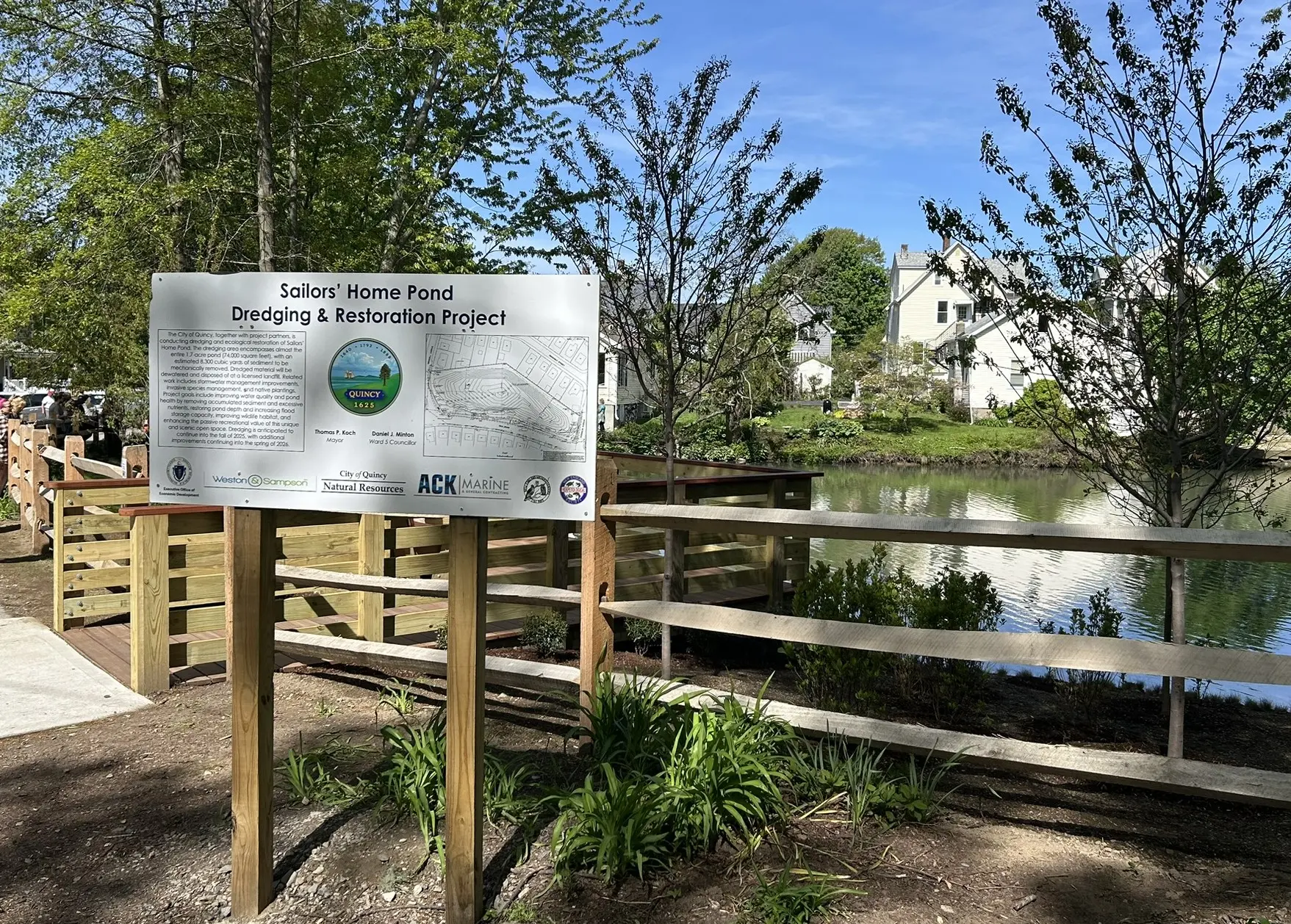
Bagasse is the leftover biomass from the production of sugar cane that has a unique, porous, honeycomb carbon structure that makes it excellent at absorbing liquid. In fact, it can absorb five times its weight in water. The dredging contractor applied this dewatering agent to allow transporting the sediment to the out-of-state disposal facility. To provide added access to the pond post-dredging, the city had the dredging contractor construct an observation deck and improve sidewalk connections. These small but important additional amenities provide residents with a raised platform to view the diverse wildlife present at Sailors Home Pond.
Results
By the time all dredging operations were done, 8,300 cubic yards of sediment were removed from the pond bottom, resulting in the pond being nearly twice as deep as it had been, making it once again able to capture significant volumes of stormwater runoff. The upland open space was restored; native, non-invasive plantings were installed; and stormwater BMP improvements were implemented to address runoff discharges to the pond, the major source of water quality issues.
Despite its small size, the “new and improved” Sailors Home Pond once again offers significant natural resource benefits to both the human and non-human area residents, with the ability to provide wildlife habitat and refuge in an urban environment. In particular, it provides:
- foraging and resting areas for waterfowl and shorebirds
- increased biodiversity of local flora and fauna
- pollutant removal and cleaner water and air quality
- climate resiliency through carbon storage and mitigation of the urban heat island effect
- flood control through stormwater retention
- an enjoyable destination for residents and visitors alike
Celebration
This past May, Thomas P. Koch, the Mayor of Quincy, along with other city officials, the project team, and many interested citizens, celebrated the successful completion of the multi-year ecosystem restoration of Sailors Home Pond. The absolute highlight of the celebration was the release of the 22 turtles that had been re-homed for the duration of the project.
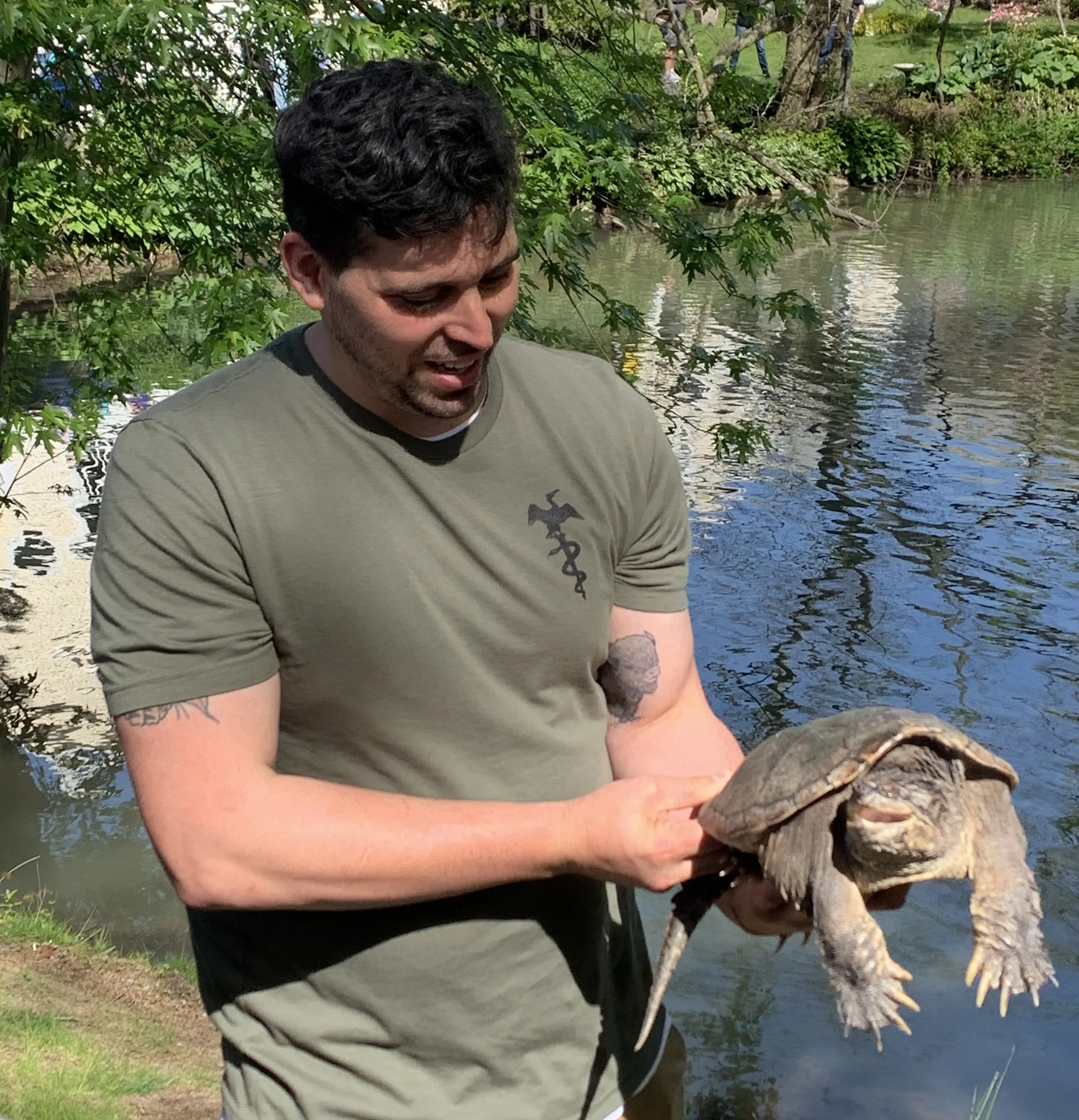
With water quality visibly improved post-dredging, this restoration project helps ensure that Sailors Home Pond remains a healthy and valuable natural resource and community amenity well into the future. Projects like this demonstrate how thoughtful environmental restoration can improve water quality, strengthen habitat, and create long-term community value while enhancing public spaces for future generations.
Authors
Daron Kurkjian, PE (MA), LSP, is an Associate and Team Leader with Weston & Sampson in Boston. Daron has over 20 years of experience in environmental investigation, remediation, and construction management. He has managed the characterization, profiling, and handling of more than 120,000 cubic yards of surplus soil and sediment for unrestricted re-use to hazardous waste and TSCA waste disposal. kurkjiand@wseinc.com
Andrea Spruch, PE (DC, MA, VA), is a Senior Project Engineer at Weston & Sampson in Reading, Massachusetts. Andrea has 20 years of experience in design for stormwater management, floodplain and drainage plan studies, erosion and sediment control plans, resource protection area plans, environmental impact analysis reports, and low impact design. spruch.andrea@wseinc.com
Heather Lis, MS, is an Environmental Scientist with the City of Quincy’s Department of Natural Resources. Heather has over 18 years of experience in the administration of municipal conservation programs across Massachusetts, including restoration and maintenance of wetlands and conservation land, open space management and long-term planning, wetlands and stormwater permitting, and project review. hlis@quincyma.gov
Posted in fall issue of Lakeline Magazine


