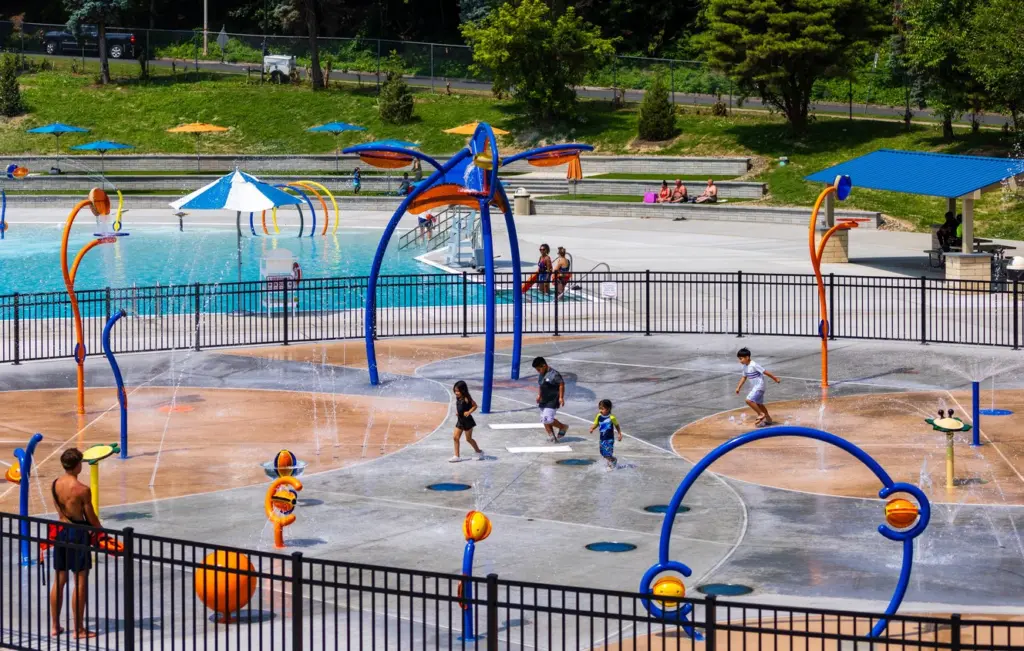
Splash pads are popular community amenities due to their accessibility, inclusivity, and lower operating costs compared to traditional pools. However, their open design makes them vulnerable to stormwater intrusion, which can introduce debris, sediment, organic matter, and excess water into recirculation systems. These impacts can lead to degraded water quality, increased chemical demand, filter maintenance, and temporary facility closures.
This article examines the role of rain diverters as a practical stormwater management solution for splash pads. Installed between splash pad drains and the reservoir, rain diverters redirect stormwater away from the treated water system, helping to maintain water quality and reduce operational disruptions. The article outlines common challenges associated with rainfall, including hydraulic overload, contamination, and chemical imbalance, and explains how rain diverters can improve system performance.
Design considerations such as placement, drainage routing, landscape coordination, and maintenance planning are discussed, along with methods for evaluating performance through operational metrics. As communities face increasingly frequent and intense storm events, rain diverters offer a relatively simple and cost-effective strategy to improve resilience, reduce maintenance demands, and provide a more reliable visitor experience.
Rain Diverters Can Help Keep Splash Pads Running After Summer Storms
Splash pads have become a popular amenity for communities because they are inclusive, accessible, and often more cost-effective to operate than traditional pools. But their open, surface-level design also makes them vulnerable to one of summer’s most common disruptions: sudden rain.
Even a short pop-up storm can introduce runoff, debris, pollen, sediment, and organic matter into a recirculating splash pad system. That can lead to cloudy water, chemical imbalance, clogged strainers, increased filter backwashing, and temporary closures while operators work to restore safe, balanced conditions.
A relatively simple solution can make a significant difference: rain diverters.
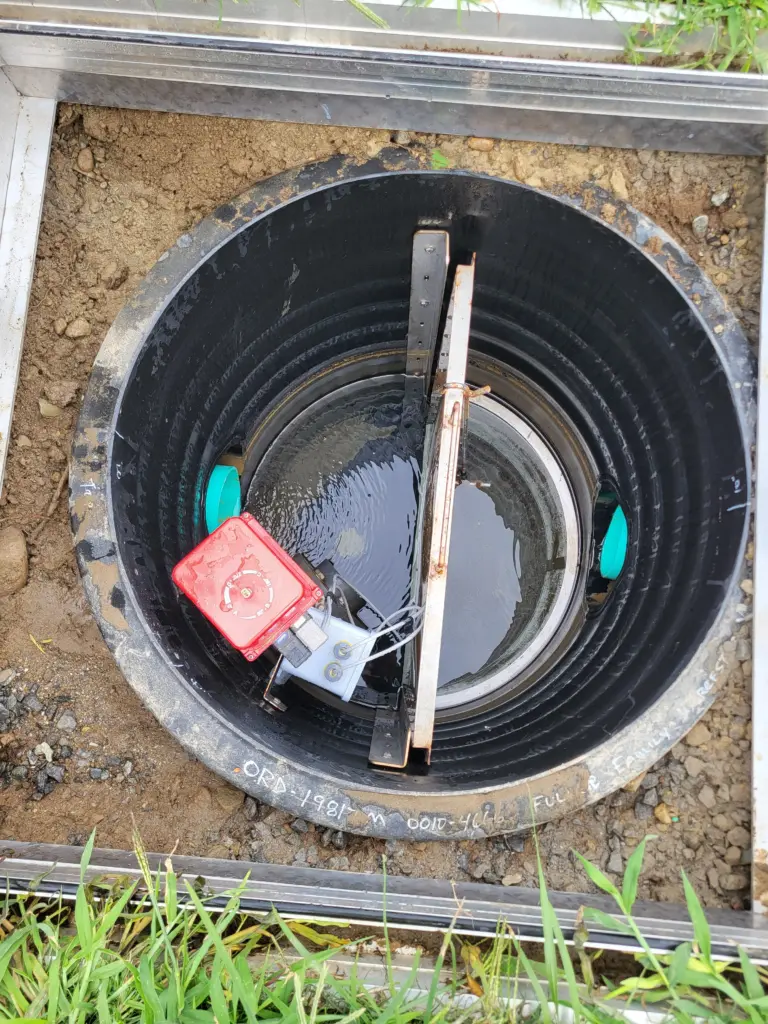
Rain diverters help keep stormwater out of a splash pad’s central recirculation system. Installed below grade between the splash pad drains and the system reservoir, they redirect rainwater to a dedicated drainage or infiltration area instead of allowing it to enter the collection tank. By separating stormwater from the treated water loop, diverters can help reduce contamination, protect water quality, and minimize post-storm maintenance needs.
Why Rain Creates Operational Challenges
Rainfall can quickly destabilize the carefully controlled balance that keeps splash pads clean, safe, and enjoyable. Common impacts include:
Hydraulic overload. Sudden inflows can exceed system capacity, sending excess water to waste or creating operational strain.
Contamination. Runoff can carry pollen, mulch, fine sediment, and organic matter into drains and collection points.
Chemical imbalance. Dilution and added organic load can increase disinfectant demand, affect pH, and require operators to shock, drain, clean, or rebalance the system.
For splash pad operators, a brief storm can translate into hours of troubleshooting. For families, it can mean unexpected closures and a frustrating guest experience.
Key Benefits of Rain Diverters
When properly designed and installed, rain diverters can help communities improve splash pad performance in several practical ways:
Improved water quality. By keeping stormwater and debris out of the reservoir, diverters can help reduce turbidity and support more consistent disinfection after rain events.
Reduced chemical demand. Less organic matter and dilution can mean fewer major chemistry swings and fewer shock treatments.
Less downtime. Cleaner post-storm conditions can help operators reopen faster and reduce mid-day closures.
Lower maintenance labor. Staff may spend less time emptying pump strainer baskets, backwashing filters, and troubleshooting cloudy water.
Better visitor experience. Fewer interruptions mean more reliable access for families and stronger community trust in the facility.
Design and Maintenance Considerations
Rain diverters are typically low-tech, but their success depends on thoughtful placement, drainage design, and maintenance planning. Recreation managers and facility owners should consider the following:
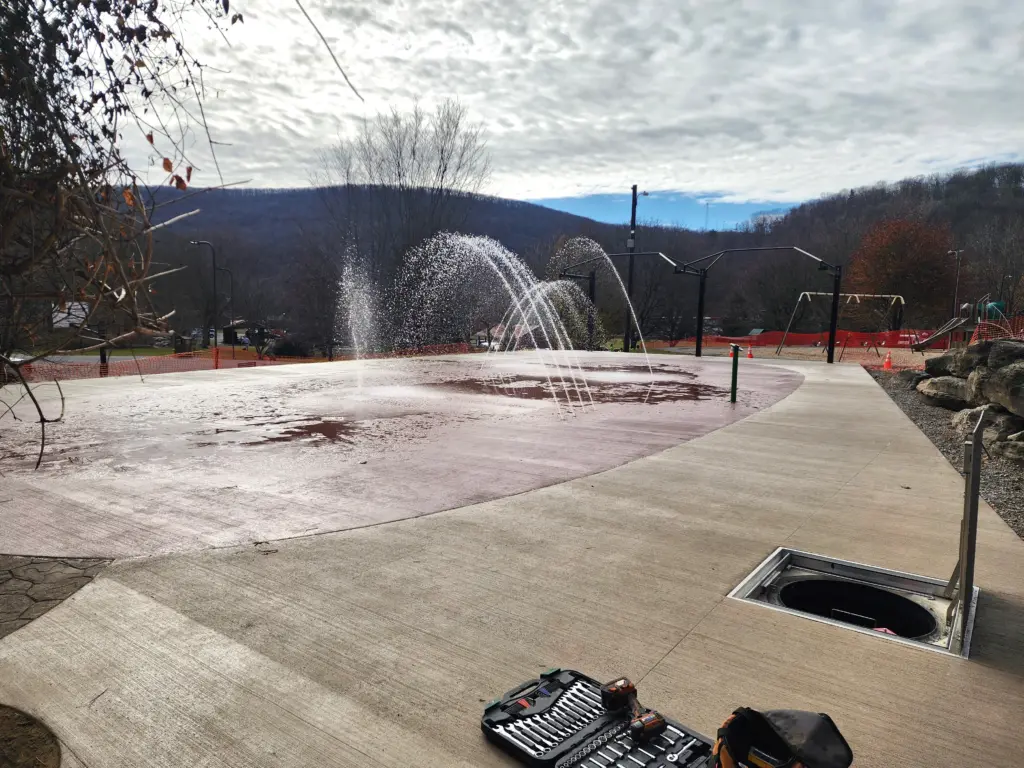
Place diverters strategically. Diverters should be located between the splash pad drains and the reservoir, while avoiding high-traffic pedestrian areas whenever possible. Access hatches should be placed with safety, visibility, and aesthetics in mind.
Confirm the drainage path. Elevations matter. Diverted water needs a clear gravity route to a drainage structure, infiltration area, storm basin, or other appropriate outfall designed to handle the volume.
Avoid creating new hazards. If diverted water daylights, it should be kept away from walkways where it could pond, create slipping hazards, or freeze in colder weather.
Coordinate with landscaping. Adjacent planting beds, mulch, and slopes can contribute runoff and debris. Regrading, shallow swales, permeable buffer strips, or other green infrastructure strategies can work well alongside diverters.
Plan for inspections. Operators should add post-storm diverter checks to their maintenance routine. A quick inspection of the access hatch, strainer basket, and sediment buildup can help prevent larger issues.
Track results. Communities can document metrics such as post-rain turbidity, chlorine demand, filter backwash frequency, maintenance time, and closures to evaluate performance and support future improvements.
A Practical Resilience Strategy
Rain diverters do not replace filtration, water chemistry management, or diligent operations. Instead, they support those systems by keeping rain-borne contaminants and excess water out of the recirculation loop in the first place.
As summer storms become more frequent and intense in many regions, practical rain management is becoming an important part of splash pad operations. For communities looking to improve reliability, reduce maintenance demands, and provide a better experience for visitors, rain diverters can offer a modest, targeted solution with meaningful operational benefits.
The original full version of this article by Kyle Elmy, PE, CPO, was originally published in PRB+. Read the original article on Weathering The Storm by setting up a free profile.
Kyle Elmy, PE, CPO, is a Project Manager II in Weston & Sampson’s Design Studio in Boston, Massachusetts. He can be reached at elmyk@wseinc.com.