[Planning for People:] Designing Public Involvement that Works
Articles
Planning for People: Designing Public Involvement that Works
May 18, 2026
Sristhi Jain, LEED®, Green Associate, Project Planner, Weston & Sampson, Foxborough, MA
Joanna Nadeau, AICP, Technical Specialist I, Weston & Sampson, Reading, MA
Robert Collins, AICP, Senior Project Manager, Weston & Sampson, Rocky Hill, CT
Public engagement is a cornerstone of effective planning, yet traditional approaches—such as evening meetings and lengthy surveys—often fail to reflect the full diversity of a community. This article argues that low participation rates are less a sign of public apathy and more an indication of flawed outreach design. Drawing on practical experience, it outlines strategies for reshaping engagement to better align with how people live, communicate, and make decisions.
Key recommendations include shifting engagement into everyday community spaces, breaking participation into smaller and more frequent interactions, and using clear, accessible language that resonates with non-technical audiences. The article also emphasizes the importance of structuring plans for how people actually read them, leading with actionable information rather than lengthy background content. Transparent follow-up and visible accountability are highlighted as critical to building trust and sustaining participation over time.
By removing logistical and communicative barriers and adopting more inclusive, flexible methods, planners can expand participation beyond the small segment of residents who traditionally engage. Ultimately, the piece demonstrates that designing engagement around real-life behavior—rather than institutional norms—results in stronger, more representative plans that communities are more likely to support and implement.
Low turnout at public events can be attributed to apathy, but it can also be an outreach problem.
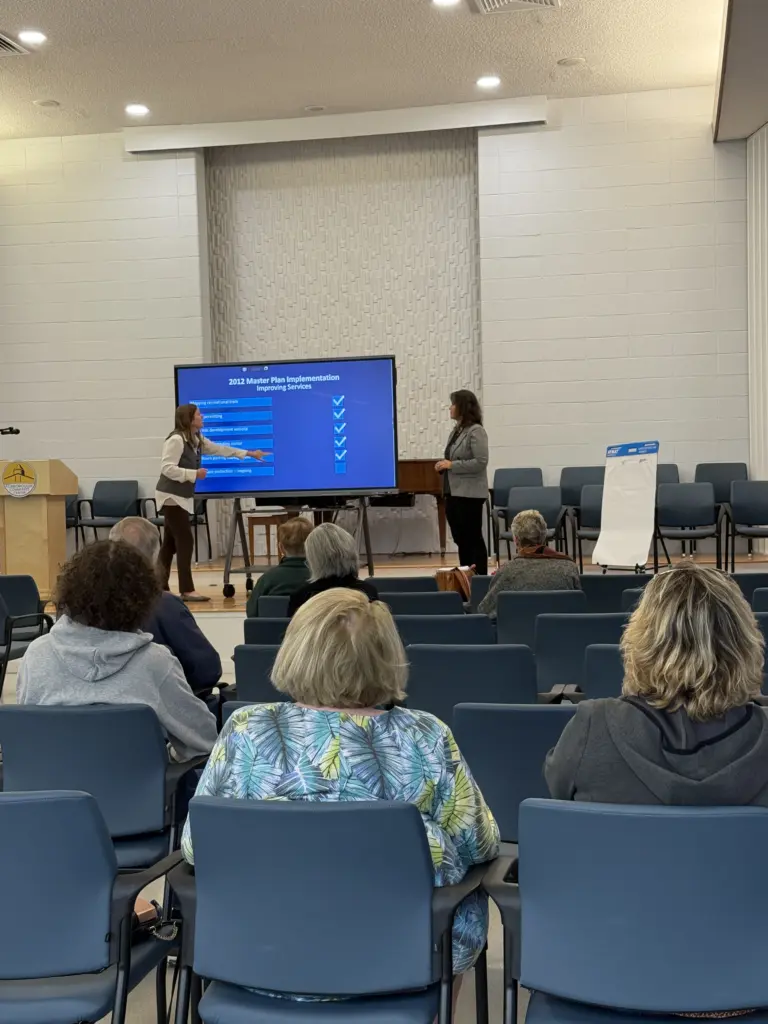
On a wet Tuesday evening, a few older residents trickled into the multipurpose room, glanced at the poster boards, and then slipped out early. Staff had done everything “right.” They promoted the event, developed informative slides, had a sign-in form, and even conducted an online survey, but the room never filled. The low turnout could be attributed to apathy, but it could also be an outreach problem.
Comprehensive and master plans are meant to be the public’s roadmap for their community. Yet, our invitations often ask people to leave their real lives at the door. If we want better plans, we must redesign how we ask, where we ask, and what we do with what we find out.
Real Planning Doesn’t Start in Meeting Rooms – It Starts in Real Life
Planning professionals often design public engagement activities as if the public is waiting to be invited. The reality can typically be quite the opposite. With an aging population, the people most likely to attend traditional evening workshops are older adults with stable, predictable schedules. Meanwhile, younger residents like those balancing shift work, college, childcare, or multiple jobs are dramatically under-represented in planning rooms. Their absence is not disinterest; it’s incompatibility.
If we keep relying on weeknight meetings and formal sign-ins, we will keep hearing from the same slice of the community and then wonder why our plans struggle with long-term relevance. Municipal meetings and land use boards in the United States are attended by 15% or less of residents, and typically older, white, male homeowners. (Centers for Housing Opportunity (2025)1; Einstein et al. (2018)2; Rolheiser, et al (2020)3; Montalvo (2008)4)
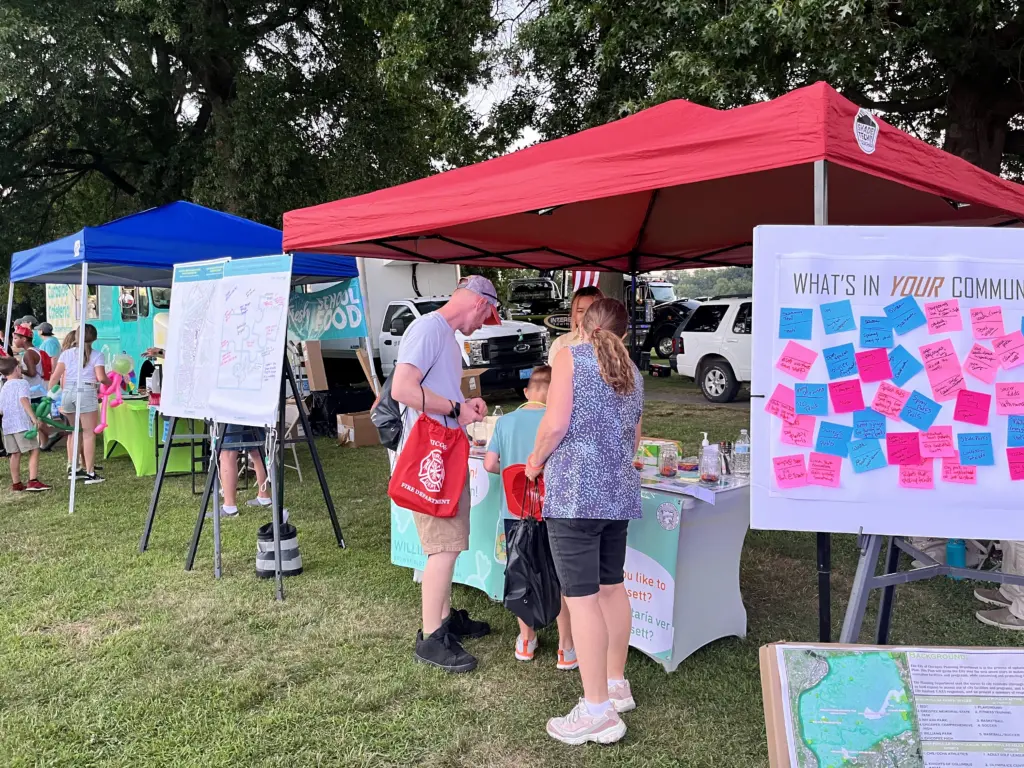
So, instead of asking people to rearrange their lives, planners need to do a better job at meeting them where they are. We should treat everyday locales as civic engagement spaces:
school pickup lines
senior centers
grocery store vestibules
bus stops
playgrounds
barber shops
sports sidelines
food pantries
farmers markets
A simple tactic such as a pop-up display with a single, specific prompt like, “What’s the first thing you’d fix on your street?” reaches parents who cannot stay for an hour, older adults who do not drive at night, or teens who will never click a meeting link. It also changes how people respond: the tone is more candid, the ideas more grounded, and the participants more varied.
As the age curve shifts, we need more – not fewer – youth voices shaping the places they will inherit. Bringing planning into everyday locations is not a gimmick, it is a demographic necessity. Communities do not exist in conference rooms. Our engagement shouldn’t live there either.
Attention is Scarce – Design for Quick Hits
Instead of one heavy ask, try designing a series of small, inviting steps, like a 30-second, one-question poll at a pop-up, for example, or through a QR code.
Traditional engagement tactics assume that if people care, they will give us an hour. The thing is: long workshops and dense surveys reward free time, not interest. Caregivers, shift workers, students, and younger adults can spare minutes, not evenings – so when participation requires a large block of time, we don’t filter commitment, we filter capacity.
Instead of one heavy ask, we need to design a series of small, inviting steps. Begin with a 30-second, one-question poll at a pop-up, for example, or through a QR code. Then, follow up with a five-minute ranking exercise that reports back on previous comments and requires no login and no registration. A final step might be a short online huddle, voice note, or comment wall reacting to what others have said. Each touchpoint lowers the barrier, builds familiarity, and makes participation feel like an ongoing conversation rather than a single appointment that residents must prepare for.
When we break engagement into lighter, more frequent interactions, more people – and more types of people – participate. Ten micro-touchpoints with 100 residents generate richer insight than one evening meeting with the same 15 regulars.
Small tasks also help people enter at their own individual comfort level: parents between errands, teens waiting for a ride, older adults who prefer not to speak publicly, and residents who don’t feel “expert enough” for a microphone. Participation becomes a ladder, not a gate – people can climb as high as they choose and no one is excluded because they can’t clear the first rung. Asking less, more often doesn’t dilute engagement, it multiplies upon it. This allows communities to learn earlier, adjust sooner, and shape plans in ways that reflect the rhythm of real life, not just the schedules of the few who have the time to stay in the room.
Communicate Clearly, not Technically
An important item to consider is that residents don’t reject planning; they reject feeling talked at. Most people don’t speak in phrases like “activate multimodal corridors” or “enhance resiliency through regulatory alignment,” yet those are the sentences that fill our documents and websites. Plain language is not dumbing down, it is opening the door. By putting verbs and numbers up front, the meaning lands instantly and can be measured later:
“Add three safer crossings by December”
“Plant 200 street trees by next spring”
“Repaint bike lanes on Main Street this summer”
Most people don’t speak in phrases like “activate multimodal corridors” or “enhance resiliency through regulatory alignment,” yet those are the sentences that fill our documents and websites.
Specifics create credibility while vague intentions create distance. If a page can’t be understood in 30 seconds, for example, that’s not a literacy issue, it’s an editing issue on our side.
Clear writing also signals respect. When information is direct, people can decide, respond, and act without needing translation. That matters for residents who speak English as a second language, older adults with limited vision, and busy families reading on a phone while making dinner. Short sentences, active voice, and real examples beat dense paragraphs every time. Replace acronyms with full words, swap technical terms for everyday ones, and explain maps with a 50-word “what this means” box. Planning is already complex; communication doesn’t have to be. When we write like humans instead of handbooks, more people see themselves in the work – and more people stay engaged.
Write Plans for How People Read
Most plans open with chapters that no one asked for – history, methodology, legal context, acknowledgments – while the information residents actually came to find sits 100 pages later. Reverse that. Lead with one page that answers the only questions people bring to a plan: What are we trying to do? What will change near me? When will I see it?
Start with a single-sentence vision, followed by five short goals written in plain language. Then add a list titled, “This year you’ll see…” with four to six concrete actions tied to real locations, each with a date for the next milestone and an identified owner. That page should stand on its own, work on a phone screen, and make sense without explanation. If someone reads nothing else, they should still understand the direction and the near-term commitments.
After that, move directly to the elements that people search for the most: the future land use map and a short box explaining how it affects housing, height, character, or streets in everyday terms. No color-key decoding, no jargon, no guessing. People don’t read plans the way planners write them; they skim for what impacts their street, their school, their corner store. When the most useful information comes first, trust increases and frustration fades. Residents come to plans to find themselves, so help them do it fast before they walk out of the room or close the tab.
Follow up Matters
Trust doesn’t come from asking, it comes from responding. Too often, engagement ends when the meeting ends, and residents are left wondering whether their input mattered or whether it disappeared into a report that no one will read. To change that, make the follow-through as visible as the invitation. After each round of input, publish a single, simple panel – on line, on social media, in the library, and at the bus stop – that says, “You said… We did… Next you’ll see…” with one clear date. No paragraphs, no jargon, no promises without owners. The goal is not to recap everything – rather, it’s to prove progress.
More than volume, it is consistency that truly matters. Updating the same panel monthly, even if the change is small, signals reliability and honesty. Sometimes the “We did” will be a completed action; sometimes it will be, “We’re still working on this and here’s why.” Both build more credibility than silence does. When residents see their fingerprints on the work – street by street, milestone by milestone – they return, they bring others, and skepticism becomes participation. Closing the loop is not the end of engagement; it is the engine that keeps it going.
Make Accountability Visible, not Boring
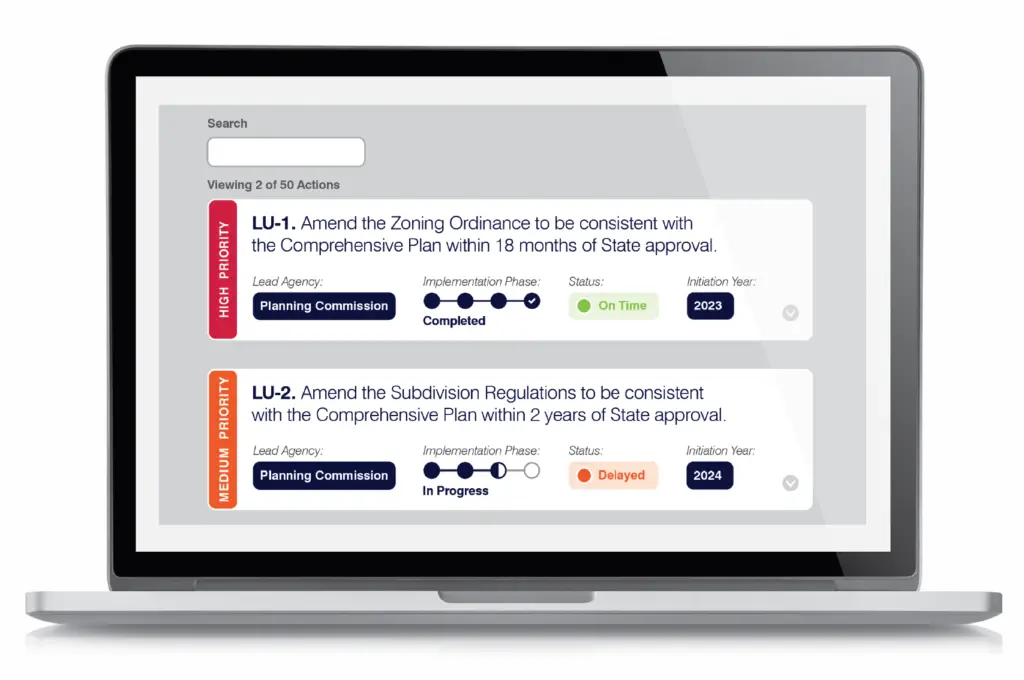
Rather than routing residents through another town hall to hear status updates, publish a living checklist that shows what’s happening in real time.
Accountability usually lives in places that the public never sees – in PDFs, staff spreadsheets, or quarterly reports buried on a website. But when progress is invisible, it feels imaginary and skepticism fills the gap. Rather than routing residents through another town hall to hear status updates, publish a living checklist that shows what’s happening in real time. Keep it simple: one table that captures the status of all actions and next steps in one place. with columns for Place, Action, Owner, Funding Path, Start Window, Next Milestone, Metric, Status. Post it online, print it for the library and senior center, and include a QR code on project boards. The goal isn’t decoration, it’s legibility.
Power lies in consistency and clarity. Update the checklist quarterly, even if the update is small, using only three status words:
planned,
in progress,
done,
This way residents don’t have to decode phrases like “under review” or “pending coordination.” Add dates, not paragraphs. When people can see what moved, what stalled, and why, they stop guessing and start trusting. A visible checklist does what a meeting rarely can: it turns accountability into something shared, not defensive – and it keeps the community engaged long after the workshop ends.
Remove Hidden Barriers
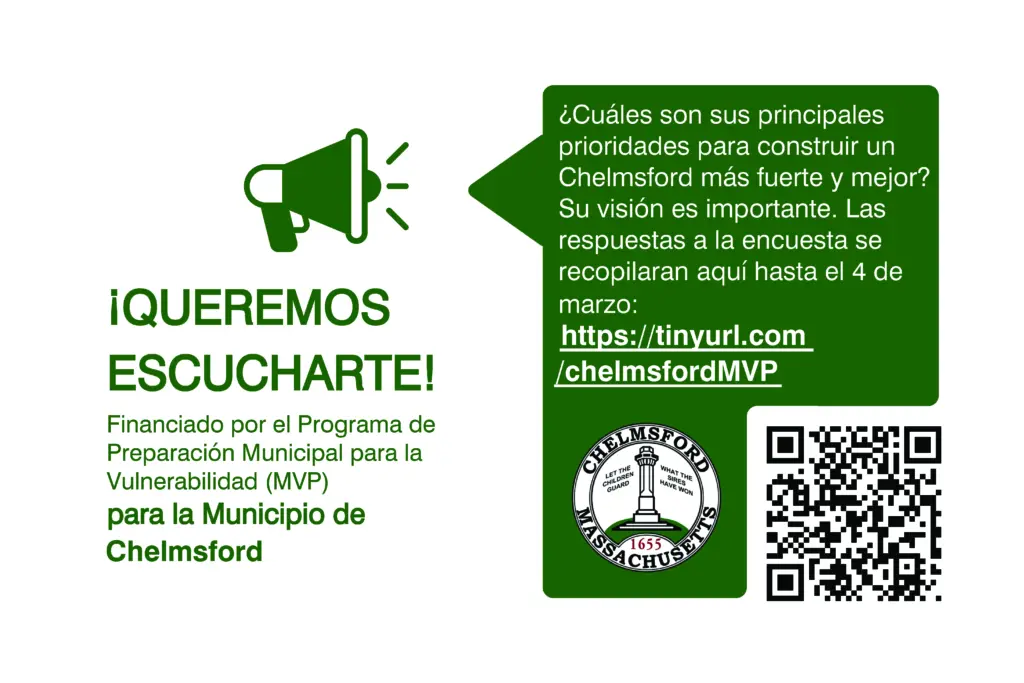
To help reach more people, consider translating materials into a language the local community will better understand.
To intentionally reach people that are juggling full lives, we suggest these tactics – none of which are expensive:
offer two time slots
rotate days
choose ADA-accessible, transit-reachable sites
translate materials
accept voice notes
provide a kids’ table
co-host with non-government partners
The Massachusetts Municipal Vulnerability Preparedness (MVP) Grant Program, for example, established a framework for equitable engagement that requires three methods be used by funded projects to reach impacted communities:
print
in person
virtual (or online)
This multi-channel approach is meant to reach people where they are. Building on that, the MVP program also encourages the use of equitable engagement modifiers – adaptations that respect that everyone comes with a unique life situation. Different native languages, different work schedules, different abilities to access things – internet access, transportation access, or wheelchair access – can all inhibit someone’s ability to participate. Other perspectives like caregiving responsibilities or a lack of trust or familiarity with government processes should also be considered as you design your engagement strategy, making sure there is an entry point for each situation.
Measure What Matters
Count outreach results like touchpoints: first-time participants, neighborhood coverage, and languages served as measures of success, not just the number of chairs filled. Share results with your planning team and be prepared to adjust quickly. If the first tactic you use doesn’t work, think about how to do it differently before the next engagement. If your tactics bring in good numbers but they’re the usual participants, it’s time to think more creatively.
How this Works – Over the Course of a Project
A good engagement process starts with a conversation – or many – with the community and key organizations. Where are you starting from? Are there already established channels that reach a variety of residents? If those exist, lucky you! Communicate the engagement timeline and strategy and go for it.
If not, start by asking what we know works and doesn’t work. Conduct the first engagement somewhere people go and make it open ended to capture what they are thinking. Don’t ask people to adapt to your topic right out of the gate.
Once you have some channels identified, offer something short and concrete, maybe online, where they can easily weigh in on something specific. For a third round, offer a workshop or open house to give feedback on the report – what you heard were their priorities, areas of disagreement, and point those out in the invitation.
Open house style workshops with stations and no timed agenda let people come and go as they please so they don’t have to stay the whole time. Set up a rotating presentation deck, feedback boards, and clear voting tools.
Open house style workshops with stations and no timed agenda let people come and go as they please so they don’t have to stay the whole time.
The lesson is simple: low turnout isn’t a verdict on the community, it’s feedback on outreach design. When we bring planning into everyday life, ask for less information more often, and report progress plainly. We don’t just fill rooms, we build plans that truly belong to the people they are meant to serve.
Sristhi Jain, LEED® Green Associate, is a Project Planner with 10 years of experience in urban planning with a strong foundation in architecture and environmental planning and design. She is based in Weston & Sampson’s Foxborough, Massachusetts office and can be reached at Jain.Sristhi@wseinc.com.
Joanna Nadeau, AICP, is a Sustainability and Resiliency Specialist with over 20 years of experience in public engagement, community planning, policy analysis, program development, and environmental education. She is based in Weston & Sampson’s Reading, Massachusetts office and can be reached at nadeau.joanna@wseinc.com.
Robert Collins, AICP, is a Senior Project Manager with 30 years of experience in long-range municipal planning, zoning regulation updates, and public engagement. He is based in Weston & Sampson’s Rocky Hill, Connecticut office and can be reached at collins.robert@wseinc.com.