Private Sector Lessons from the Municipal Energy Manager Program
Articles
Private Sector Lessons from the Municipal Energy Manager Program
April 2, 2026
William Lefebvre, Sustainability Specialist and Environmental Scientist, Weston & Sampson, Lowell, MA
Meeting Massachusetts’ climate laws requires decisive action at the municipal level. The Mass Save Municipal Energy Manager (MEM) program plays a vital role in advancing decarbonization, electrification, and sustainability across municipal portfolios, especially in energy-intensive facilities such as schools. Through grant support, project planning, greenhouse gas inventory updates, and stakeholder coordination, Weston & Sampson has helped five municipalities access nearly $10 million in funding for clean energy initiatives. While designed for municipalities, the program’s lessons are widely applicable to commercial and residential building owners navigating capital planning and electrification decisions. As state leaders consider significant reductions to Mass Save funding, the program stands as a proven model for removing financial barriers to decarbonization and accelerating progress toward climate goals across all sectors.
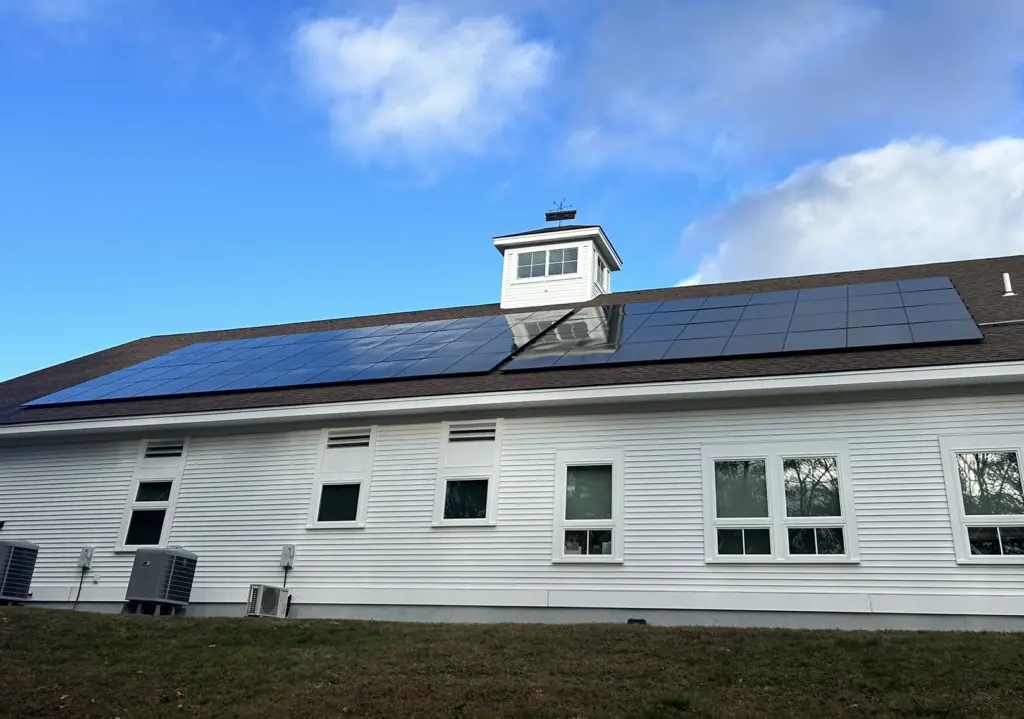
The Massachusetts Municipal Energy Manager program promotes sustainability, decarbonization, and electrification efforts, like solar panels and heat pumps, across municipal portfolios, and has direct applications to the private sector as well.
Municipal decarbonization is essential to being able to meet the Commonwealth of Massachusetts’ climate laws. Not only does decarbonization help safeguard our future while subsequently creating resilient communities, but it also reduces overhead municipal energy costs. As a Municipal Energy Manager (MEM) under the Mass Save Program, Weston & Sampson is working to implement decarbonization efforts for five municipalities across the Commonwealth. The role is fully funded through a collaborative effort of Massachusetts’ electric and natural gas utilities and energy efficiency service providers.
The MEM Grant is designed to promote sustainability, decarbonization, and electrification across municipal portfolios, especially in schools due to their high energy use and emissions. We have been able to help municipalities across a wide range of needs, sizes, and government structures. While the role focuses on municipalities by design, the lessons learned are applicable to commercial and residential building owners, property managers, and developers throughout the Commonwealth.
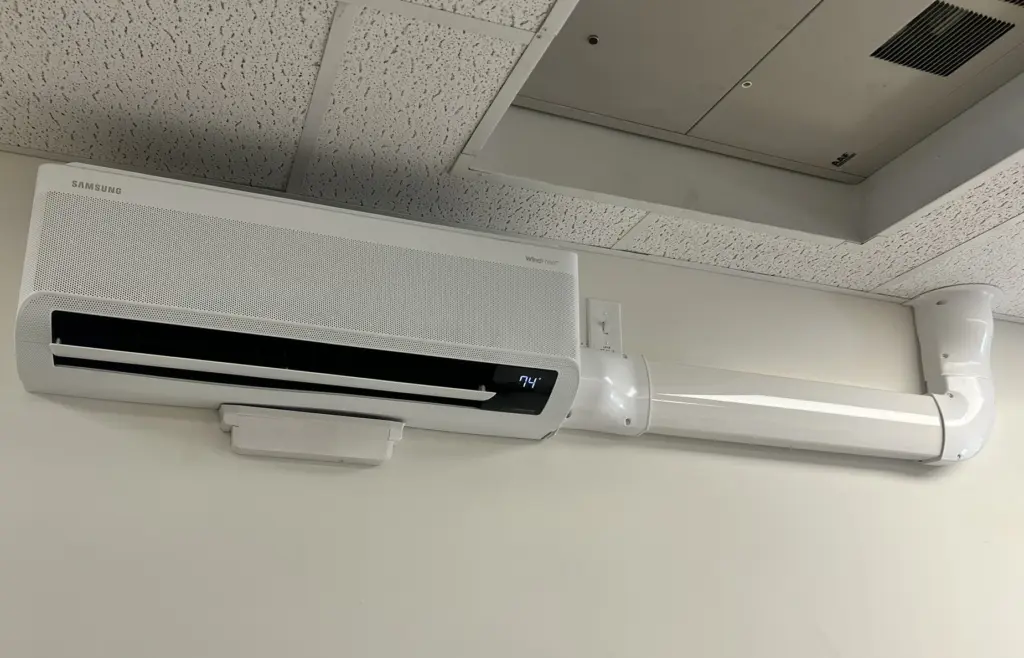
Heat pump
Since September 2025, we have assisted in the application of close to $10 million in grant opportunities that directly fund clean energy, decarbonization, and electrification projects. The MEM program has been specifically helpful in smaller municipalities which may not have the capacity for grant management, priority project planning, and stakeholder engagement that larger towns or cities do. By the end of the three-year contract, we will have helped the five municipalities apply for numerous grants, updated municipal greenhouse gas inventories, and provided a clear priority plan for the town to move forward with electrification projects.
This past March, we assisted one local community, in collaboration with state officials, an external grant consultant, and an engineering firm, on a competitive school decarbonization grant through the MEM program. If awarded, a school in town will be able to convert their old, fossil-fuel-based HVAC equipment to clean, efficient heat pumps that reduce energy costs and environmental impacts. These are lessons that are easily applied to the commercial side.
As alluded to above, although the MEM program focuses on municipal facilities, it has direct applications for the private sector as well. When it comes to capital planning for decarbonization, commercial property owners, like municipalities, face the question: What should we electrify first, and in what order? This can apply to multifamily housing operators evaluating heat pump conversions, developers planning all-electric new construction, or office and industrial owners facing retrofit decisions during tenant turnover.
From a consultant’s standpoint, the MEM integration into existing municipal operations subsequently educates municipal staff on decarbonization priorities and which actions have the most leverage in making progress. This education can translate into town operations that will promote private decarbonization through expanded residential and commercial education and incentives.
The work done thus far through this grant program is a great case study in the success of Mass Save and shows the importance of the continued funding of the program. At a time when the Massachusetts Legislature is considering a $1 billion reduction in Mass Save’s operating budget, potential cuts to Mass Save could significantly impact progress on building decarbonization across all sectors. Programs like Mass Save assist in removing the financial barrier to effective decarbonization, both in the public and private sectors. If Massachusetts wants to meet its own climate laws and safeguard our future, programs like Mass Save must be expanded, not reduced.