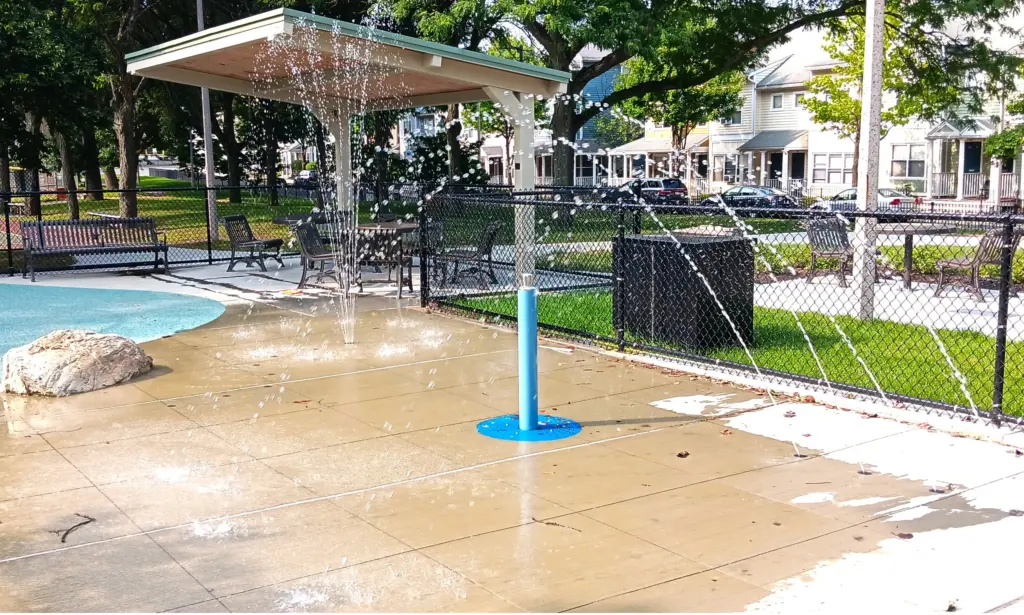
As municipalities seek cost-effective, inclusive alternatives to traditional swimming pools, splash pads have emerged as a popular solution due to their accessibility, reduced liability, and lower operational demands. Among splash pad configurations, spray-to-drain systems are particularly valued for their simplicity and minimal infrastructure requirements. This paper examines an evolution of that simplicity through the use of non-electrical splash pad systems, which replace electronic controllers and solenoid valves with mechanically activated, slow-closing hydraulic valves. By eliminating the need for electrical service, these systems reduce installation complexity, long-term maintenance, and operational oversight—an important consideration as municipal staffing and resources become increasingly constrained. The article outlines the mechanics of non-electrical systems, their maintenance needs, and typical limitations related to flow capacity and lack of programmable sequencing. A cost comparison highlights savings in both capital and operational expenses, while municipal experience demonstrates reliable performance and strong user acceptance despite maintenance considerations such as debris intrusion. When appropriately matched to project scale and goals, non-electrical splash pads offer a durable, low-overhead recreational option that balances play value with long-term cost efficiency.
Over the years, splash pads have become an increasingly popular alternative for municipalities to traditional pools due to their inclusivity, reduced liability, and lower operating costs. Generally, splash pad systems fall into two categories: recirculating systems and spray-to-drain systems. Spray-to-drain splash pads are especially appealing for their simplicity, low maintenance requirements, and straightforward operation. Traditionally, these systems rely on an electrical connection to power the controller that turns the features on and off by opening and closing solenoid valves.
Non-electrical activators, however, take this simplicity even further. By allowing splash pads to be mechanically activated rather than electronically, they eliminate the need for electrical service at the splash pad, reducing both installation complexity and long-term maintenance demands. As municipal staffing continues to be stretched thin, the operational ease and reliability of non-electrical splash pad solutions are becoming increasingly attractive to communities seeking low-overhead recreational amenities.
The Mechanics of Non-electrical Splash Pads
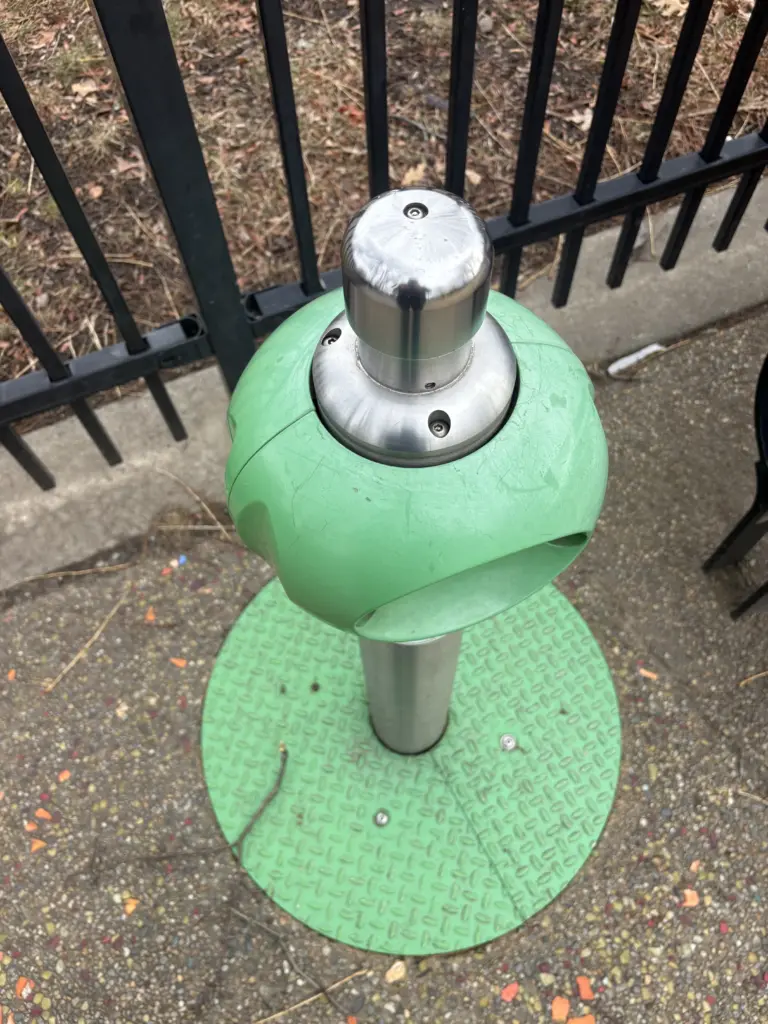
Each year, the American Water Works Association (AWWA) releases its State of the Water In The primary control component of non-electrical splash pads is a slow-closing, spring loaded valve. When the activator is pushed, it opens the valve, allowing water to flow to the features. Once activated, the valve begins a controlled, gradual closure, shutting off the water to the splash pad after a predetermined duration. The closure time of the valve is adjustable, allowing the system run time to be tailored to site-specific operational and water-use requirements. The time increments are commonly set for between 30 seconds and 1 minute, which is generally sufficient for user enjoyment while limiting excessive water consumption and reducing wear on the system.
Maintenance and Servicing Needs
As with any splash pad system, the maintenance and service requirements of non-electrical splash pads are influenced by a variety of project specific conditions, with key factors including the amount of debris in the water, water hardness, and the overall frequency of use.
Maintenance and servicing needs are reduced with non-electrical splash pads but not eliminated altogether. Typically, routine maintenance is relatively straightforward. The most common service task involves replacement of the hydraulic valve’s internal assembly. This is a normal wear item designed to be serviced periodically over the life of the splash pad. The valve’s replacement interval is not fixed but will vary depending on site conditions and operating demands. Splash pads with higher bather loads or more challenging water quality may require more frequent servicing.
Because this component is a known consumable, operators can proactively plan for maintenance by ordering spare internal assemblies in advance. Keeping replacement parts on hand allows for routine servicing to be completed without significant downtime. With proper planning and routine upkeep, non-electrical splash pads can provide reliable, long-term operation with minimal operational disruption.
Additionally, non-electrical splash pads do not require space to house sensitive electrical or control equipment, such as a mechanical vault or room. The absence of this space further minimizes ongoing operations and maintenance requirements, as there is no space that requires routine servicing and inspection.
Non-electrical systems are typically limited in the amount of water they can deliver, which makes them best suited for smaller splash pads.
Limitations
Eliminating electricity from a splash pad system may offer simplicity and reliability, but it also introduces certain limitations that should be considered during design. The most significant constraint is the maximum achievable flow rate. Non-electrical systems are typically limited in the amount of water they can deliver, which makes them best suited for smaller splash pads, mostly made up of ground sprays or installations with modest water feature demands. Larger, more complex play environments may exceed the practical hydraulic capacity of these systems without introducing multiple activators.
Another key limitation is the absence of a programmable controller. Without a controller, the splash pad cannot support feature sequencing or scheduled operation. Sequencing, where water features activate in patterns or cycles, is often incorporated to enhance interactivity and play value, creating a more dynamic experience for users. Scheduling is commonly used to restrict operating hours, manage water usage, and reduce wear on system components.
While these limitations do not diminish the effectiveness of non-electrical splash pads in appropriate applications, they do underscore the importance of aligning system selection with project goals. For facilities prioritizing simplicity, durability, and reduced electrical infrastructure, non-electrical systems remain a practical solution; however, projects requiring higher flow rates, interactive sequencing, or automated scheduling may benefit from more traditional electrically controlled alternatives.
In addition to lower capital costs, non-electrical splash pads offer meaningful reductions in ongoing operating expenses, which are largely confined to water usage.
Cost Comparison
Spray-to-drain systems alone are inherently a cost-effective alternative to more complex water features. By eliminating the need for collector tanks, filtration systems, and chemical treatment, these systems significantly reduce both initial construction costs and long-term operation expenses. Removing electricity from the equation further enhances these savings by eliminating the need for electrical infrastructure, control panels, and associated installation requirements.
In addition to lower capital costs, non-electrical splash pads offer meaningful reductions in ongoing operating expenses. With fewer mechanical and electrical components, the system requires minimal maintenance and servicing and little to no daily operator intervention. Operational costs are largely confined to water usage.
Municipal Experience and Input
By eliminating the need for dedicated electrical infrastructure, these splash pads offer a practical and cost-effective solution for expanding recreational water features to areas of need.
One municipality that has implemented non-electrical splash pads noted that the use of non-electrical systems is becoming an increasingly common practice for them, primarily due to the lack of electrical power available at many existing parks.
The most significant maintenance and servicing requirement that they identified for these systems was debris intrusion. Dirt, sand, and small stones tracked onto the splash pad surface can enter the water system and migrate into mechanically actuated valves. Over time, this debris can impair valve operation, cause sticking or leakage, and accelerate wear of internal components, occasionally resulting in the need for valve replacement.
Despite these maintenance considerations, the municipality reported overall positive system performance and user feedback. There was no indication that non-electrical splash pads experienced reduced usage or lower public acceptance when compared to electrically operated systems of similar capacity and programming.
When taken together, these factors make non-electrical splash pads an attractive solution for municipalities, schools, and community spaces seeking durable, low-overhead water features. When properly matched to project size and usage demands, they provide a reliable and economical option that balances play value with long-term cost efficiency.