Articles
| Positioning Utility System Operators for Long-Term Career Success |

Utility system operators, whether for water, wastewater, or other similar environmental utilities, are the backbone of public health and environmental protection. They ensure clean drinking water, safe wastewater treatment, and compliance with stringent regulations. Yet, for many operators, the question remains: How do I turn this essential role into a rewarding, long-term career? The answer lies in a combination of technical mastery, continuous learning, networking, strategic career planning, and, let’s face it, sheer ambition and drive.
First, let’s understand the utility system operator’s role. Operators manage complex systems that sustain communities. Whether working in water treatment, wastewater collection, or distribution, their responsibilities often overlap and include:
- Monitoring biological and chemical processes
- Maintaining equipment such as pumps, blowers, valves, and clarifiers – to name a few
- Testing for water quality indicators like pH, turbidity, and biochemical oxygen demand (BOD)
- Responding to emergencies and ensuring regulatory compliance
These tasks demand technical skill, attention to detail, and adaptability, but beyond that, day-to-day operators who aspire to advance must think strategically about their career trajectory.
So, what is the right course for you to take in your career? How do you propel it into something you are happy with, that pays well, and is secure, exciting, and fulfilling? Here are a few thoughts.
Certification: The Foundation of Advancement
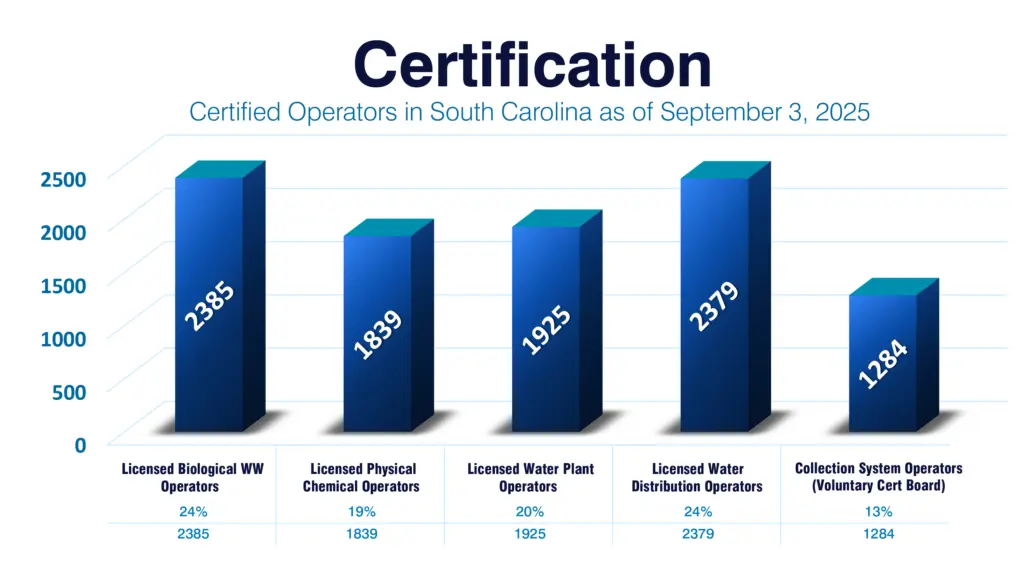
In South Carolina alone, there are thousands of certified operators who maintain critical infrastructure, and the state always needs more. Certification is not just a regulatory requirement; think of it as a career catalyst. Higher level certifications like A-level open doors to supervisory roles, specialized positions, and increased earnings potential.
So obviously, your goal should be to pursue advanced certifications beyond entry level. Over the course of my career, I have heard many operators say, “I’m not taking any more tests because my employer won’t give me a raise!” This is not the best attitude to take if you are looking to excel in your career. If your current employer will not reward you with higher pay for higher certifications, a different employer certainly will.
Enrolling in continuing education courses like chemistry, safety, and process control is also a good idea to provide you with the education and technical background that are required for career advancement. Whatever your particular interest is, pursue it by gaining more knowledge and expanding your footprint in the industry.
Another bit of career advice is to strengthen your laboratory and analytical skills to broaden your expertise. In South Carolina, there is a shortage in skilled laboratory services and there are numerous opportunities waiting for eager talent to pursue. Knowledge is the common denominator for every opportunity. The more you know, the more valuable you become.
Exploring Career Pathways
Operators can deepen their expertise in areas like:
- Technical Specialization. This often leads to roles like “Process Control Specialist” or “Industrial Pretreatment Coordinator,” each of which commands higher salaries and influence.
• Biological treatment processes (activated sludge, anaerobic digestion)
• Physical-chemical treatment (coagulation, flocculation, metals precipitation process)
• Advanced water purification technologies (reverse osmosis) - Laboratory and Compliance Roles. If you enjoy sampling and testing, consider transitioning to roles like:
• Laboratory management
• Regulatory compliance
• Environmental health and safety
These roles require strong analytical skills and often involve collaboration with engineers and regulators. - Leadership and Management. Experienced operators can move into supervisory or managerial positions:
- Chief Operator
- Plant Manager
- Director of Operations
Leadership roles demand not only technical knowledge but also communication, budgeting, and team management skills. Perhaps move into municipal government if that is of interest.
- Training and Mentorship. South Carolina faces a shortage of qualified trainers. Becoming a trainer allows you to:
- Share expertise with new operators
- Build a side business offering weekend classes
- Contribute to the profession while earning supplemental income
- Training roles often start small such as by offering classes locally, but they can grow into fully-fledged businesses. Make sure your current employer supports your small business aspirations.
- 5. Business and Contract Operations. Operators with entrepreneurial ambitions can explore:
• Contract operations firms
• Equipment and chemical sales
• Starting a maintenance or consulting business
A position in contract operations can offer flexibility – full-time, part-time, or “weekend warrior” roles – and can be a steppingstone to business ownership.
Building Skills Beyond Operations
Successful operators also understand that technical skills alone are not enough. I recommend broadening your knowledge base in areas such as:
- Electrical and mechanical systems
- Safety and emergency response (Haz-Mat, community preparedness)
- Environmental compliance (ISO 14001, RCRA, SPCC, SWPPP)
- Communication and leadership
I also recommend considering certifications in fields such as safety management, like Certified Safety Professional (CSP) or Construction Health and Safety Technician (CHST), or hazardous materials handling, like Certified Hazardous Materials Manager (CHMM). These credentials make you indispensable in multidisciplinary teams.
Networking: Your Career Accelerator
Career growth often hinges on who you know. To expand your network:
- Attend trade shows and industry conferences
- Join professional organizations like the South Carolina Water Associations
- Volunteer for committees and community initiatives and be an active member
- Promote your expertise on social media. It’s your career, take charge of it!
Networking connects you to mentors, job opportunities, and emerging trends – and them to you.
The Role of Passion and Vision
Steve Jobs once said, “The only way to do great work is to love what you do.” Operators who thrive long-term share a passion for their work and a vision for their future. Ask yourself:
- What excites you most? Is it technical problem-solving, leadership, teaching, or entrepreneurship?
- Where do you want to be in five, 10, or 20 years?
- How can you align your current role with that vision?
Define your goals early and take deliberate steps toward making them a reality. No one is going to do it for you.
Practical Steps for Advancement
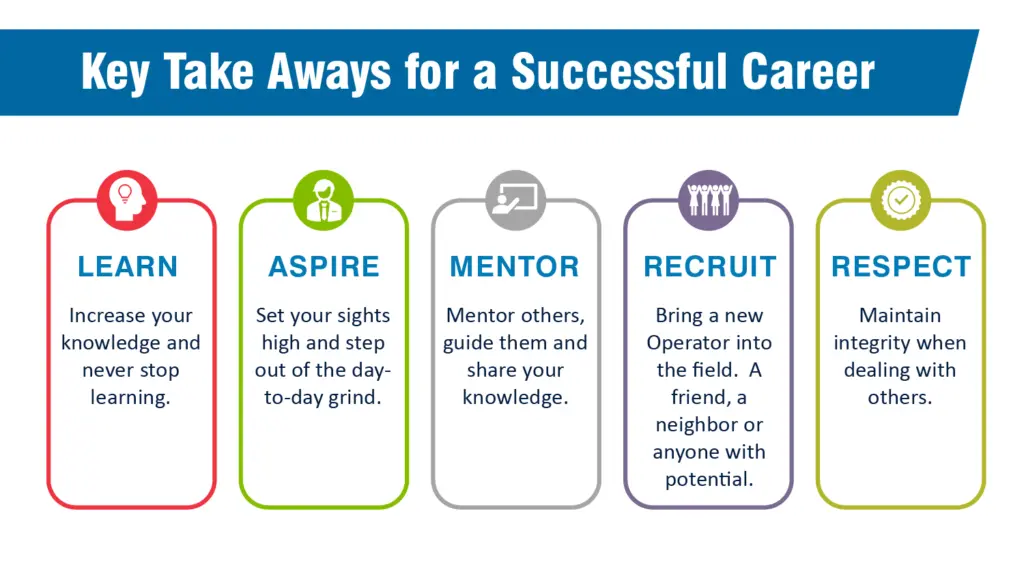
- Commit to Lifelong Learning Take classes, pursue certifications, and stay current with technology. Increase your value and knowledge and never stop learning.
- Seek Mentorship and be a Mentor to Others Learn from experienced professionals and share your knowledge with newcomers.
- Explore Side Opportunities Start small – weekend training, part-time lab work, or consulting – and grow gradually.
- Stay Ethical and Professional Integrity builds trust and reputation, each of which is critical for advancement.
- Plan for Retirement and Beyond Consider contract work or business ownership as a post-retirement option.
Knowledge is the Foundation for Every Opportunity
Every successful career in utility operations begins with knowledge and grows through passion, networking, and adaptability. Whether you aspire to run a plant, teach the next generation, or run your own business, the opportunities are vast. The key is to start now: invest in yourself, build connections, and never stop learning.
South Carolina’s water industry needs skilled, motivated operators. Position yourself not just for a job, but for a fulfilling career that makes a lasting impact on public health and the environment.

Robert Judy is the Client Manager for Weston & Sampson Services in North Charleston, South Carolina. He can be reached at judy.robert@wseinc.com.
Published in WEASC/SCAWWA Journal Spring 2026.


