Restoring Flow, Reconnecting Communities: A Nature-Based Approach to Urban Flood Resilience
Articles
Restoring Flow, Reconnecting Communities: A Nature-Based Approach to Urban Flood Resilience
November 23, 2026
Jaurice A. Schwartz, PE, Senior Team Leader and Vice President, Reading, MA, Weston & Sampson
Alison L. Eliot, PE, LSP, Interim Director of Parks, Recreation, and Cultural Affairs, City of Framingham, MA
Eric V. Johnson, PE, City Engineer, Framingham, MA
Chronic flooding in Framingham’s Walnut Street neighborhood was intensified by increasing precipitation, impaired wetlands, and legacy infrastructure that constrained natural hydrology. To address these challenges, the city implemented a multi-year flood mitigation project centered on restoring the watershed’s natural ability to absorb, store, and convey stormwater.
The project removed a flow-restricting earthen berm, restored more than 800 linear feet of stream, reconstructed and stabilized over 500 linear feet of channel and banks, expanded flood storage through wetland restoration, and improved water quality through stormwater treatment. An elevated, ADA-accessible boardwalk replaced a frequently flooded pedestrian route, creating a reliable connection between neighborhoods, schools, senior facilities, and recreational areas while maintaining hydrologic connectivity.
Supported by state and federal funding, community engagement, and coordinated permitting, the project demonstrates how nature-based infrastructure can simultaneously reduce flood risk, restore ecological function, improve water quality, and advance equitable community access. The Walnut Street project provides a replicable model for municipalities seeking resilient alternatives to conventional stormwater infrastructure.
The Walnut Street Neighborhood Flood Mitigation Project is a comprehensive climate-resilience initiative that serves a densely populated vulnerable neighborhood in Framingham, Massachusetts. Situated in the Federal Emergency Management Agency (FEMA) 100- and 500-year flood zones, the area has experienced chronic flooding for many years, the impacts from which have only been exacerbated by
climate-driven increases in precipitation,
impaired wetlands, and
legacy infrastructure that constrained natural hydrology.
The Walnut Street flood mitigation project alleviated frequent storm-related flooding that not only disrupted daily life for neighborhood residents but also posed safety concerns due to pedestrian access being limited and impediments to emergency response.
Through a multi-year effort supported by state-funded Municipal Vulnerability Preparedness (MVP) Action Grants and FEMA Flood Mitigation Assistance funding, the city removed an earthen berm impeding flow, restored wetlands and stream channels, expanded flood storage capacity, and constructed an elevated, ADA-accessible boardwalk. The completed corridor now provides a safe and reliable pedestrian and bicycle connection between schools, senior facilities, recreational amenities, and surrounding residential neighborhoods.
By integrating nature-based flood mitigation, sustainable materials, low-impact construction practices, and coordinated public engagement, the finished project provides resilient public works infrastructure that enhances hydraulic performance, protects environmental resources, promotes non-vehicular transportation, and improves equitable access for the community.
The project also demonstrates how municipalities can move beyond conventional stormwater infrastructure to implement watershed-scale, nature-based solutions that reduce flood risk while enhancing community connectivity and ecological function.
A Flood-Prone Corridor Under Pressure
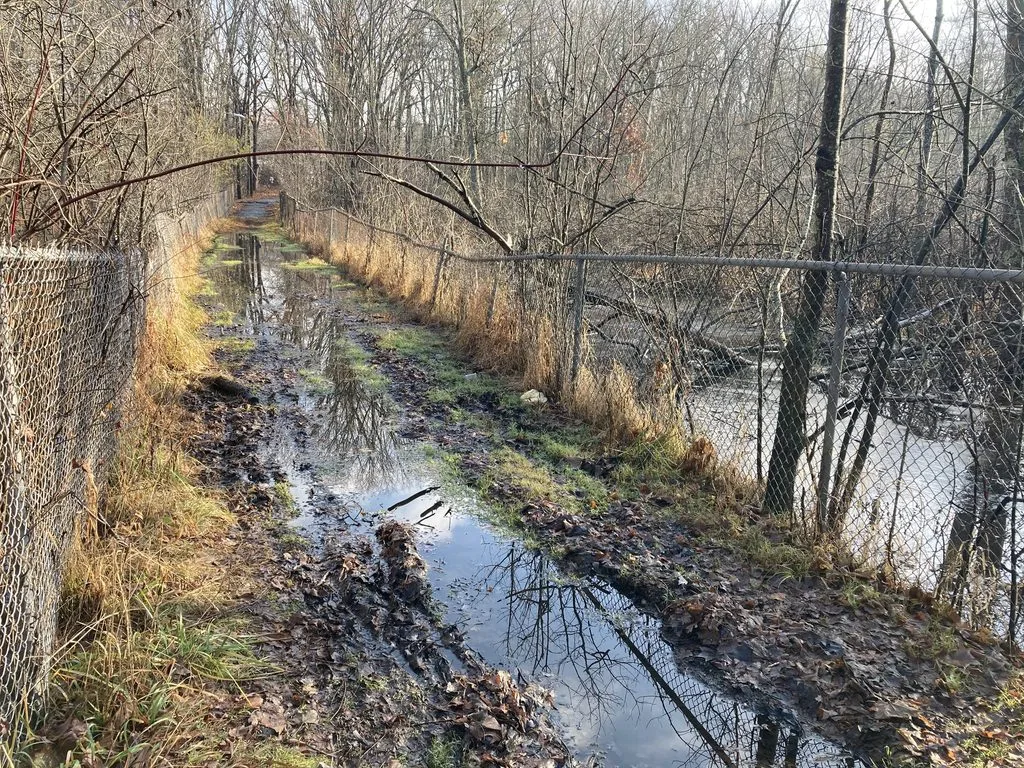
Frequent storm-related flooding in the Walnut Street corridor not only disrupted daily life for neighborhood residents but also posed safety concerns due to pedestrian access being limited and impediments to emergency response.
At the center of the issue was a degraded hydrologic system. A former earthen berm, used as an informal cut through and nicknamed “swamp path,” crossed wetlands and streams that restricted flow and disconnected the floodplain. Eventually, accumulated debris and sediment, along with a failing wetland, had significant additional impacts to the entire system’s capacity to manage stormwater.
With climate change-related increases in precipitation, these constraints translated into more frequent and severe flooding that impacted adjacent residential properties and community infrastructure. Recognizing the limitations of traditional stormwater conveyance approaches in settings like this, the city pursued a fundamentally different strategy: restore the system’s natural ability to absorb, store, and convey water.
Nature-Based Design as Core Infrastructure
The city began by retaining Weston & Sampson and their subconsultant, SSV Engineering, to help them reimagine the corridor as a resilient system with restored and functional streams and wetlands, along with expanded flood storage and vulnerable infrastructure replaced with adaptive, accessible design.
Key interventions for the Walnut Street project prioritized stream restoration, wetland rehabilitation, and floodplain reconnection, including the removal of the flow-restricting berm (“school path”) to restore hydraulic connectivity.
Rather than relying on new gray infrastructure features like pipes or culverts, the Walnut Street project centered on restoring more natural ecological processes to improve hydraulic performance. The team’s design prioritized stream restoration, wetland rehabilitation, and floodplain reconnection as primary flood mitigation tools. Key interventions included:
The removal of the flow-restricting berm (“school path”) to restore hydraulic connectivity
More than 800 linear feet of stream restoration along Sucker Brook and its tributaries
Reconstruction and stabilization of over 500 linear feet of channel and banks
Debris dam removal and sediment management to improve flow reliability
Expansion of flood storage capacity through wetland restoration
Together, these actions reestablished natural flow regimes that allowed stormwater to spread into restored floodplain areas rather than be concentrated in constrained channels. By expanding storage and improving conveyance, the entire system now performs more effectively under both current and projected storm conditions.
These improvements were combined with further ecological enhancements like establishing native vegetation and invasive species management. The team also used targeted slope stabilization with seeding and coir logs to improve habitat quality.
This integrated approach demonstrates how green infrastructure strategies can address flood resilience while also improving water quality and restoring ecosystem functionality and health.
Reimagining Access: Infrastructure that Adapts
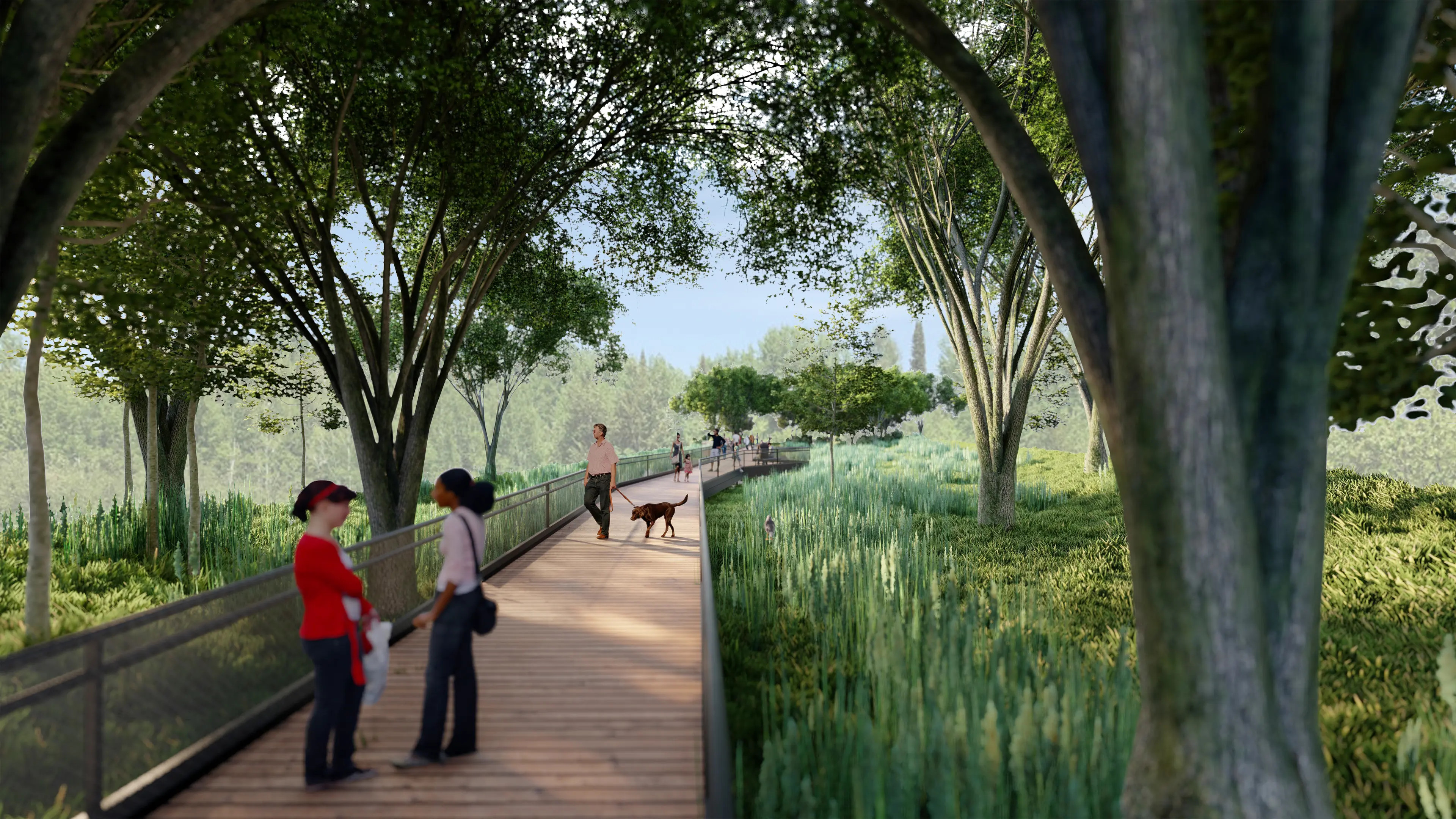
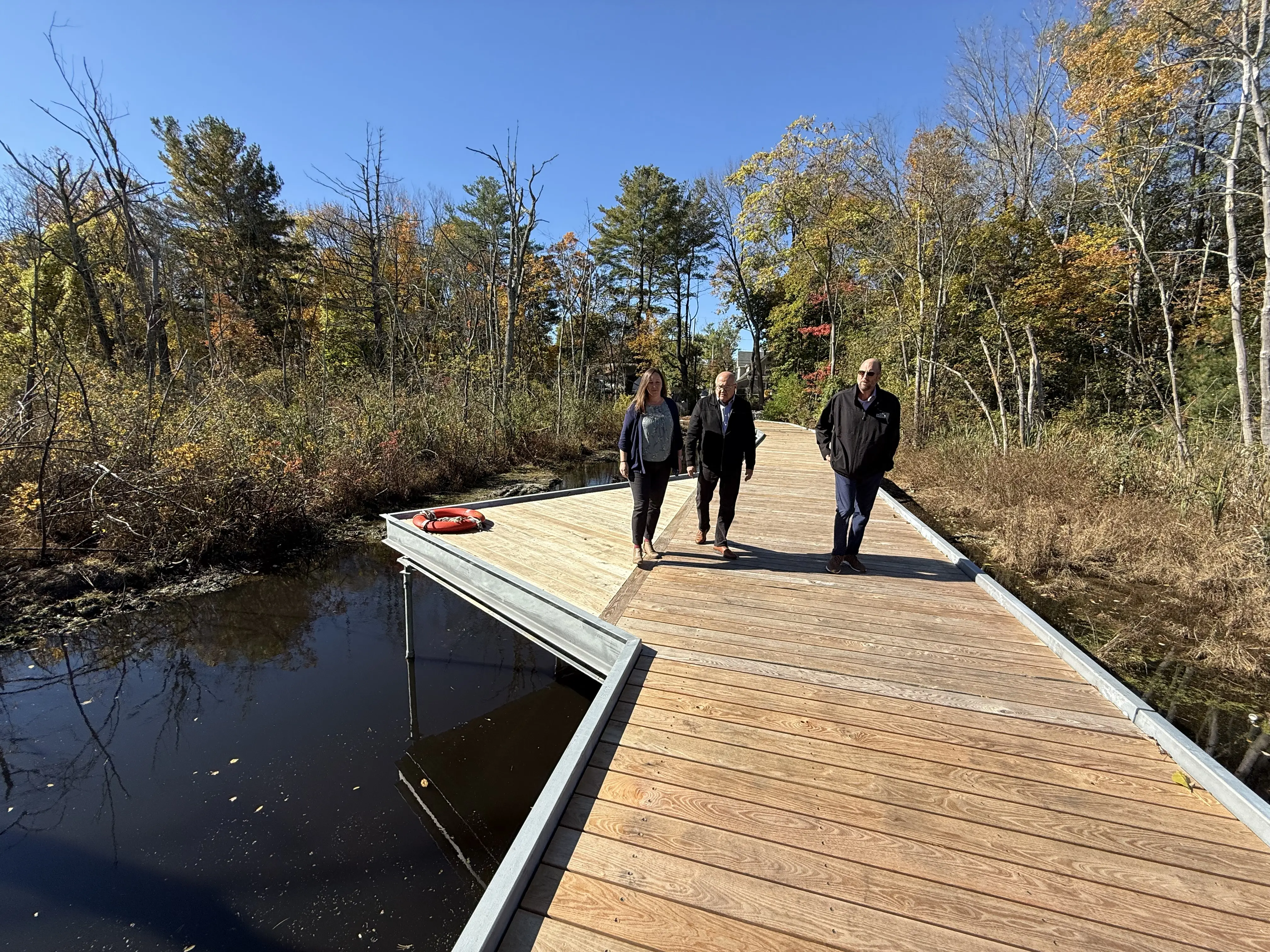
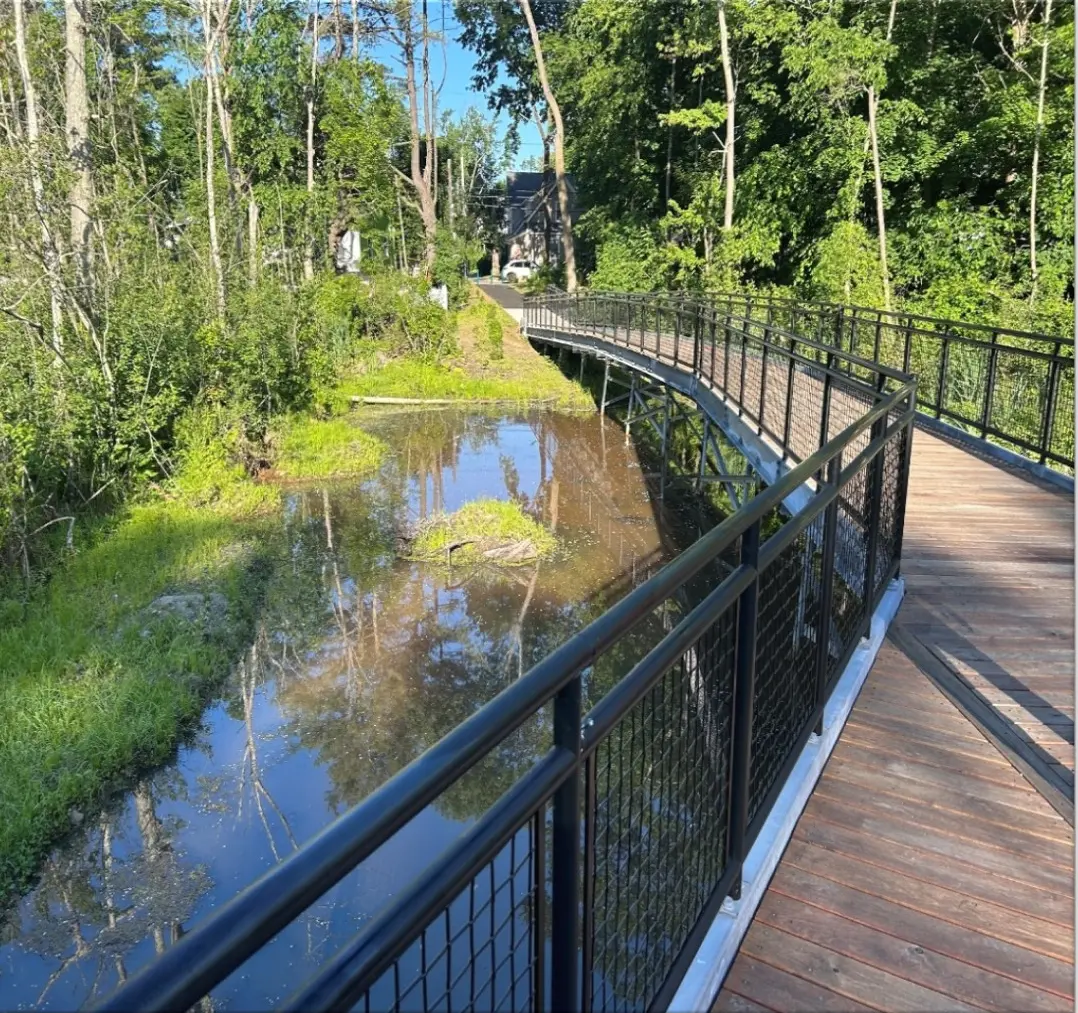
The Walnut Street team designed an ADA-compliant boardwalk to maintain continuous access regardless of hydrologic conditions to provide a reliable connection between neighborhoods, schools, senior facilities, and recreational areas without obstructing flow.
While hydrologic function was central to the project, community connectivity emerged as an equally critical design driver.
Frequent flooding had rendered the former “school path” that bisected the wetlands unsafe and often made it impassable. In its place, our team designed an elevated, ADA-compliant boardwalk to maintain continuous access regardless of hydrologic conditions. The new boardwalk now provides a reliable connection between neighborhoods, schools, senior facilities, and recreational areas while maintaining hydrologic continuity by spanning wetland areas without obstructing flow.
It also enhances public safety by eliminating exposure to floodwaters and extends accessibility through new sidewalks and ADA ramps. It now serves as both infrastructure and public space, supporting transportation needs while creating opportunities for recreation, environmental education, and community interaction.
And its location within a vulnerable neighborhood underscores the importance of equitable infrastructure investment. By ensuring continuous, safe access during storm events, the project addresses long-standing disparities in equity, mobility, and resilience.
Water Quality and System Performance
In addition to mitigating flood risk, the project also addresses water quality, a long-overlooked component of urban stormwater management. The installation of a new stormwater treatment system captures and treats runoff that previously entered wetlands untreated. This reduces pollutant loads, supports healthier aquatic ecosystems, and limits less-desirable secondary impacts like mosquito breeding.
Combined with restored wetland function, these improvements enhance the watershed’s ability to filter contaminants, regulate temperature, and support biodiversity. A key aspect of the project is that it demonstrates the multi-benefit potential of nature-based systems. It improves not only how water moves through the landscape but also its quality and ecological value.
Delivering Results Under Challenging Conditions
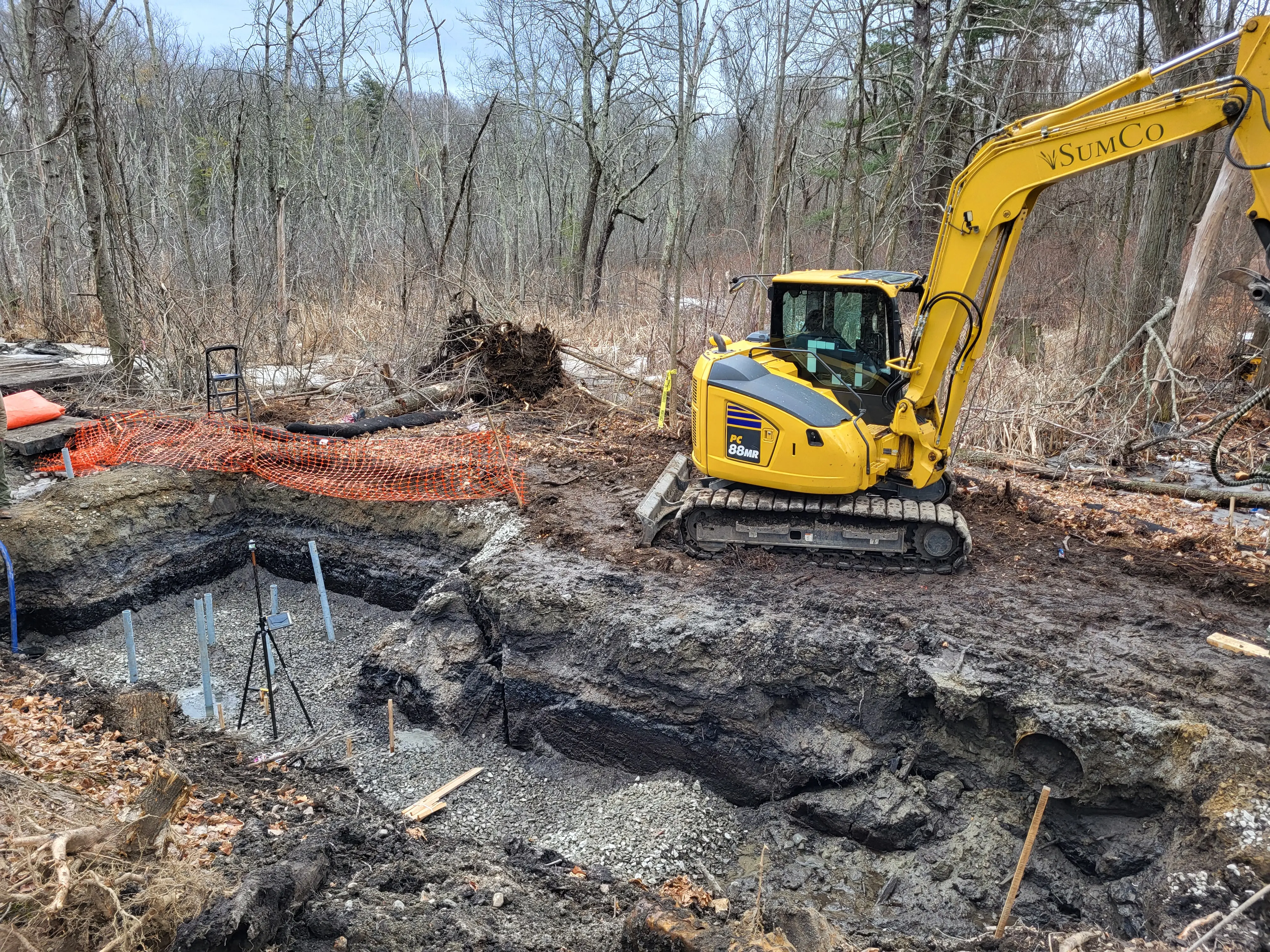
Implementing a project of this complexity within an active wetland system posed significant engineering and construction challenges. Unstable soils and fluctuating groundwater conditions required adaptive solutions, including the use of helical piles driven deeper than initially anticipated to support boardwalk foundations. To minimize disturbance, construction activities were carefully sequenced, resorting to handwork in sensitive areas and temporary mat roads to protect soils.
Sustainability efforts involved the use of black locust decking to eliminate the need for chemical treatment, reuse of clean soils to divert it from landfills, and the repurposing of removed trees as mulch, all to reduce waste, lower costs, and reinforce environmental goals.
At the same time, the team navigated a complex regulatory landscape that required coordination across multiple agencies to obtain the necessary approvals. These included:
Massachusetts Environmental Policy Act (MEPA) review through submission of an Expanded Environmental Notification Form (EENF) and a Single Environmental Impact Report (SEIR)
Chapter 91 Waterways License
Section 401 Water Quality Certification
An Order of Conditions issued by the city’s Conservation Commission under the Massachusetts Wetlands Protection Act (WPA)
U.S. Army Corps of Engineers (USACE) Pre-Construction Notification (PCN)
Despite these constraints, the project remained on track through strong interagency coordination, proactive construction management, and a commitment to low impact and green infrastructure practices.
Sustainability was at the forefront throughout the design and construction process, with materials and methods selected purposefully to minimize environmental impact and lifecycle costs, including:
Use of black locust decking, a naturally rot-resistant timber that eliminates the need for chemical treatment
Transport and reuse of clean soils off-site to divert it from landfills
Repurposing of removed trees as mulch and access materials
These strategies reduced waste, lowered costs, and reinforced the project’s environmental goals.
Funding a Multi-Year Vision
As mentioned previously, the Walnut Street project evolved through a phased funding strategy that leveraged state and federal resources to advance planning, design, and construction.
By coordinating project phases with available funding opportunities, the project team maintained consistent progress over several years while minimizing the fiscal burden on the city. This approach offers a valuable model for other municipalities: large-scale resilience projects can be achieved incrementally through strategic funding alignment rather than requiring a single, comprehensive capital investment.
Community Engagement as a Design Tool
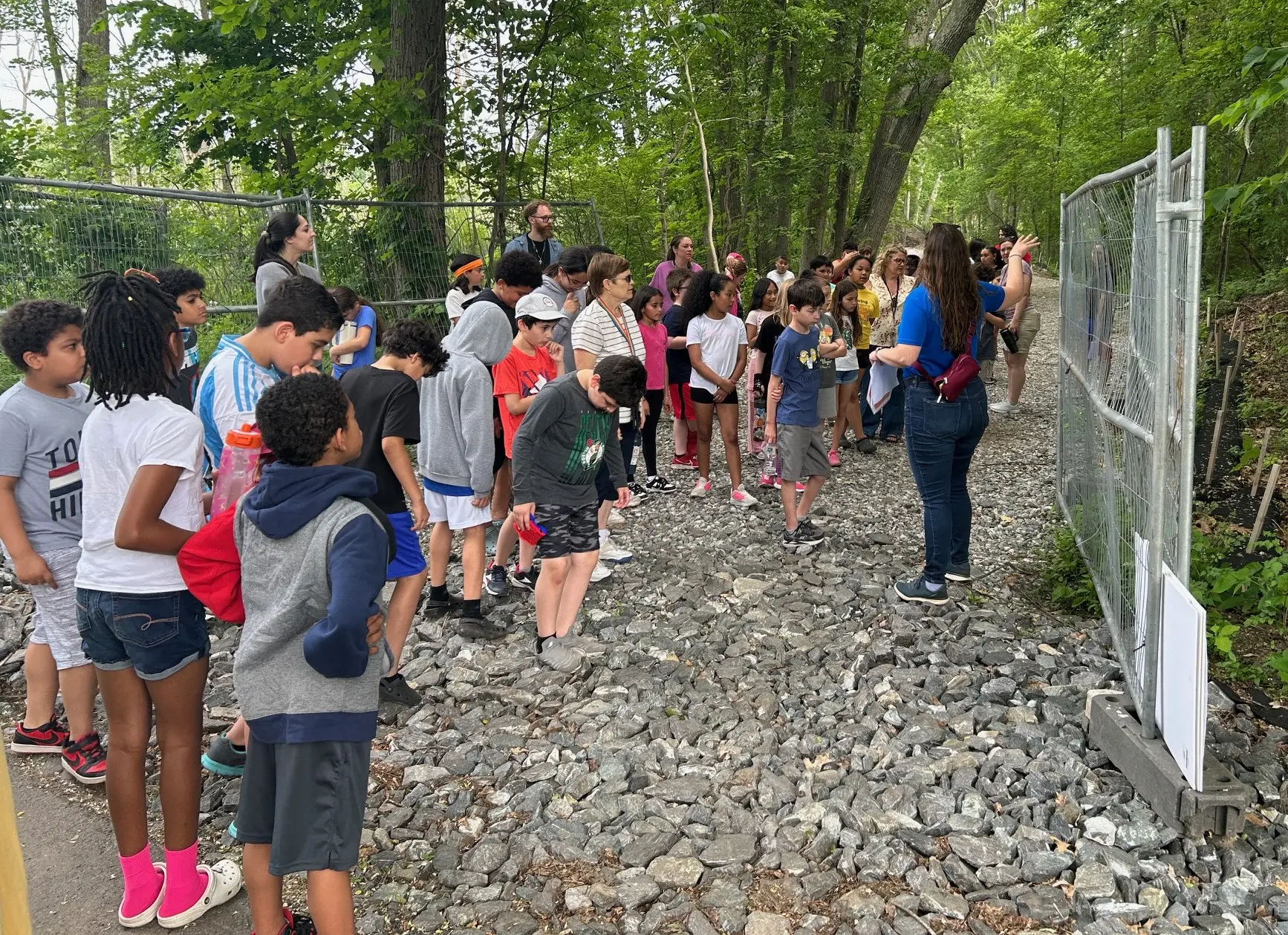
The project incorporated robust community engagement and educational programming. Initiatives included environmental leadership programs like this walking field trip with the neighborhood elementary school.
A defining feature of the Walnut Street project was its emphasis on community engagement, not as a peripheral activity but as a consistent and core component of project delivery.
A dedicated resident inspector served as a liaison between the project team and the local residents, ensuring ongoing transparency and responsiveness throughout construction. Community feedback obtained in this manner directly informed decisions, including identifying and removing additional debris dams in Sucker Brook.
In addition to construction, the project incorporated robust educational programming that was supported by grant funding. Initiatives included:
Environmental leadership programs for high school students
Stormwater education using interactive watershed models
Youth engagement through Girl Scout activities and field-based learning
Distribution of climate education materials across local schools
Community Engagement as a Design Tool
It is expected that these efforts will build long-term resilience by increasing public understanding of stormwater systems, climate impacts, and the value of natural infrastructure. By linking physical improvements with education, the project will foster a culture of stewardship that extends beyond the project footprint.
Measurable Outcomes and Lasting Benefits
…the construction of an accessible boardwalk path and other innovative, multifaceted restorations and improvements through the Walnut Street Flood Mitigation Project represents a critical opportunity to link surrounding neighborhoods together and build further support for the development of nature-based solutions across Framingham.
Shawn Luz
Framingham Sustainability Coordinator
The Walnut Street Neighborhood Flood Mitigation Project delivered tangible benefits across multiple dimensions, including:
Flood Resilience
reduced frequency and severity of flooding
expanded flood storage capacity
improved hydraulic conveyance and system reliability
Environmental Restoration
reestablished stream connectivity
enhanced wetland function and habitat quality
improved water quality through treatment and natural filtration
increased access to recreational and natural resources
Social and Educational Impact
strengthened community engagement and trust
expanded environmental education and workforce development
increased awareness of climate resilience strategies
Many residents have already expressed strong support, citing reduced flooding, improved safety, and renewed access to natural areas for activities like walking and birdwatching.
A Replicable Model for Stormwater Management
As communities across the country grapple with the impacts of climate change, the Walnut Street project offers a compelling model for the future of stormwater management. Its success lies in its integration of:
Engineering and ecology, working together rather than in isolation
Flood mitigation and transportation infrastructure, aligned to serve multiple needs
Climate resilience and vulnerable populations, ensuring equitable outcomes
Construction and education, building both physical and social capacity
By prioritizing green, nature-based solutions and system-wide thinking, the project moved beyond incremental improvements toward transformative change. For stormwater practitioners, it reinforces a key lesson, that restoring natural processes is not only environmentally beneficial but also a powerful and practical approach to managing urban flood risk. In addition to serving as a model upon which other communities across the country can build, the Walnut Street Neighborhood Flood Mitigation Project was honored with two awards.
First, the project received a 2026 “Stormy” Award from the New England Stormwater Collaborative, which was formed by the New England Water Environment Association (NEWEA), the New England Water Works Association (NEWWA), and the New England Chapter of the American Public Works Association (APWA), celebrating the best, most imaginative ideas in stormwater management in EPA Region 1.
The project was also honored with the “Community Choice Award” by the Environmental Business Council (EBC) of New England at their annual awards event.
Looking Forward
The Walnut Street project received a 2026 “Stormy” Award from the New England Stormwater Collaborative, celebrating the best, most imaginative ideas in stormwater management in EPA Region 1, and was honored with the “Community Choice Award” by the Environmental Business Council of New England.
The Walnut Street project stands as a testament to what is possible when municipalities embrace innovation, collaboration, and long-term vision. As extreme weather events become more frequent and our public infrastructure faces increasing strain, projects like this illustrate a path forward. They leverage the resilience of natural systems, the ingenuity of engineering, and the strength of community engagement.
For cities seeking to enhance stormwater performance while delivering broader public value, Framingham’s approach provides both inspiration and a roadmap.
About the Authors
Jaurice A. Schwartz, PE, is a Senior Team Leader and Vice President with Weston & Sampson in Reading, Massachusetts with 25 years of experience.She provides comprehensive stormwater planning and design services helping communities to address regulatory compliance, protect water quality, and mitigate flooding risks. She also assists municipalities in developing and implementing stormwater funding mechanisms, supporting long-term program sustainability, effective asset management, and resilient infrastructure investment. She can be reached atschwartzj@wseinc.com.
Alison L. Eliot, PE, LSP, is the Interim Director of Parks, Recreation, and Cultural Affairs for the City of Framingham. She has 18 years of experience in environmental remediation and geotechnical engineering, and her work reflects a practical, forward-looking approach to public infrastructure and open-space management, with an emphasis on continuous improvement, community needs, and climate resilience. She can be reached ataeliot@framinghamma.gov.
Eric V. Johnson, PE, is the City Engineer for the City of Framingham. He has more than 20 years of experience in technical and organizational leadership on complex municipal infrastructure, utility, transportation, and stormwater projects. His deep institutional knowledge, practical approach, and commitment to public service have helped guide major infrastructure improvements throughout the community. He can be reached atevj@framinghamma.gov.