Where Ideas Take Root: Renovating Page Park from the Viewpoint of a Young Landscape Designer
Articles
Where Ideas Take Root: Renovating Page Park from the Viewpoint of a Young Landscape Designer
June 9, 2026
Ying Zhang, Landscape Designer II, Weston & Sampson, Rocky Hill, CT
This article reflects on the renovation of Page Park in Bristol, Connecticut, through the perspective of an emerging landscape designer experiencing a full project lifecycle for the first time. The project involved improving accessibility, circulation, stormwater management, recreation amenities, and ecological function while preserving the park’s historic character. Throughout permitting, construction, and community engagement, the author observed how real-world site conditions, coordination challenges, and stakeholder concerns shape the implementation of design intent.
Key lessons emerged from navigating erosion control, utility installation, grading, planting oversight, and construction sequencing, illustrating the importance of adaptability and communication in landscape architecture. Interactions with contractors and residents further demonstrated how successful public projects depend on collaboration, transparency, and responsiveness to community needs.
Ultimately, the Page Park renovation revealed landscape architecture as a practice grounded not only in design, but also in observation, problem solving, and human experience. The project highlights how incremental decisions during construction can shape accessibility, comfort, and long-term usability, while reaffirming the role of public space in fostering connection, inclusion, and community pride.
For a young landscape designer, the path from concept to completion is rarely straightforward. It’s a journey marked by uncertainty, unexpected obstacles, and constant adaptation. Seeing a design come to life in the field reveals just how profoundly site conditions can shape outcomes. These moments are eye-opening, transforming abstract ideas into tangible lessons. Through observation and problem solving on-site, theory evolves into practice and the true depth of landscape architecture begins to unfold.
The renovation of Page Park in Bristol, Connecticut was the first project where I witnessed the entire design and construction process from start to finish.
The renovation of Page Park in Bristol, Connecticut was the first project where I witnessed the entire design and construction process from start to finish, and the experience was truly transformative. Weekly site visits gave me a clear view of how design intent translates into built form and how important coordination, flexibility, and problem solving are to the process. Seeing drawings move from paper to the field reshaped my understanding of landscape architecture as a practice that is grounded as much in observation and adaptation as it is in design.
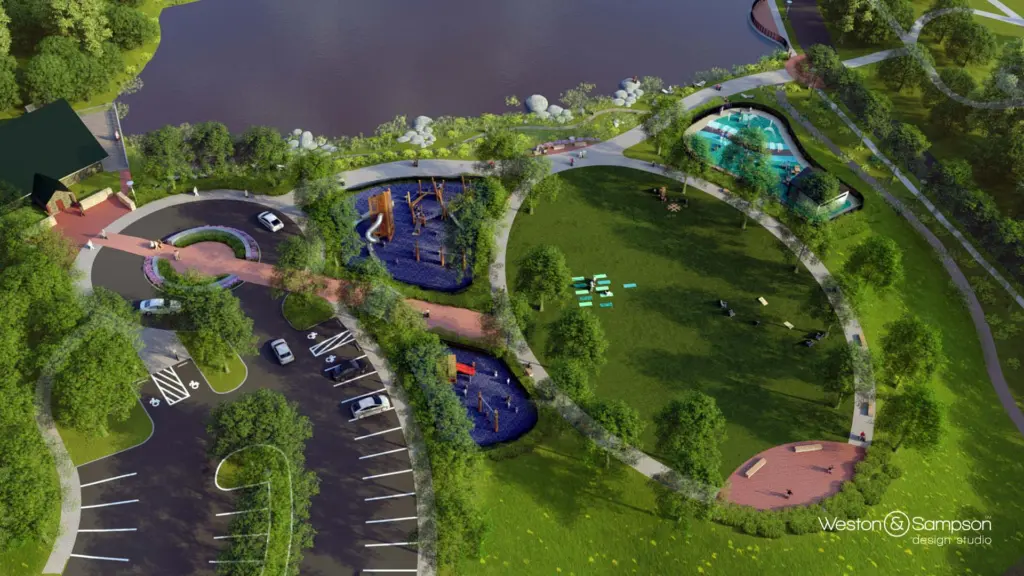
Gifted to the city in 1933, Page Park spans 86 acres and offers a wide range of activities including wooded trails, disc golf, baseball and tennis courts, a summer pool, and a pond. Renovation was necessary due to several significant challenges, including inaccessible tennis courts; insufficient parking, especially for disc golf players; narrow and deteriorated trails; and a pond that frequently overflowed during storms.
Our design approach aimed to preserve the park’s character while addressing these issues and improving accessibility, safety, and usability for the community. Rather than introducing entirely new elements, the project focused on refining existing systems and improving how people move through and experience the landscape.
Transition from Design to Construction
One of the more important early lessons came during the permitting phase when I was amazed at how many approvals were required from multiple agencies, including the US Army Corps of Engineers and the Connecticut Department of Energy and Environmental Protection. Each agency had its own standards and priorities, which meant revising details and specifications multiple times to meet compliance. This process reinforced the importance of flexibility and clear documentation.
The site’s varied topography added additional complexity throughout the construction process. Steep slopes made erosion and sediment control a consistent priority. Watching sediment collect behind silt fences, seeing inlets carefully protected, and observing stormwater move through swales provided a far deeper and more practical understanding of hydrology than any diagram ever did. Walking the site after storms also sharpened my instincts. Drainage patterns became easier to read, low points more obvious, and slopes less abstract. A two percent slope behaves very differently on paper than it does on the ground after a sustained rainfall.
As we all know, construction rarely goes as planned. At Page Park, we encountered challenges like unexpected rock formations that required additional excavation, weeds emerging after seeding, and unexplained drops in pond water levels during dry periods. Each challenge required two responses – the first was an immediate solution to keep the project moving and the second was a deeper effort to understand why the issue occurred. Both mattered. The immediate response maintains progress while the deeper investigation informs better decision making moving forward. These moments reinforced that uncertainty is not a failure of design but rather a reality of working with natural landscapes that don’t always behave the way we thought they would.
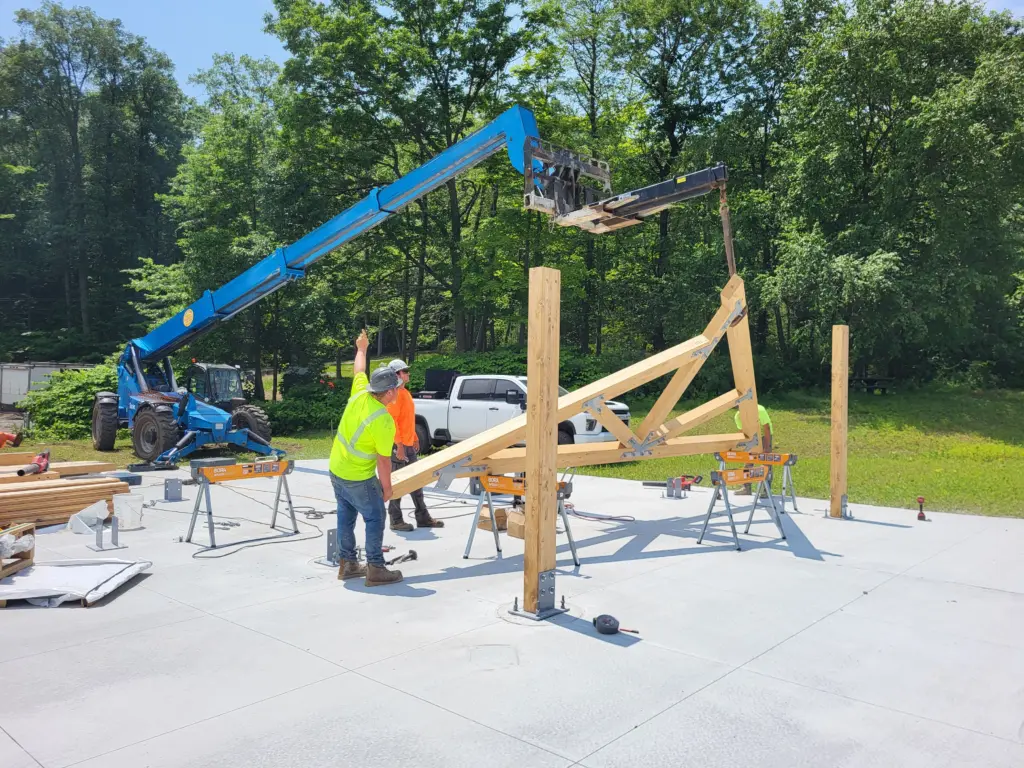
Working with contractors also became an important part of my professional education. Contractors bring deep knowledge of construction methods, while designers focus on intent and performance.
Working with contractors also became an important part of my professional education. Contractors bring deep knowledge of construction methods, while designers focus on intent and performance. Clear communication and mutual respect were essential to bridge those perspectives. One example involved tree planting. Although proper installation with exposed root flares was specified and demonstrated, several trees were initially planted too deeply, so much so that it threatened their survival. Each tree had to be inspected, measured, and tagged and have the bad planting corrected. That experience underscored how closely living materials must be monitored and how easily long-term success can be compromised by small installation errors.
The systems that remain invisible when construction is complete were just as formative. Standing in trenches as stormwater pipes were installed changed how I think about grading and surface detailing. Tracing water from inlet to outlet in the field revealed how interconnected each decision truly is, and construction sequencing also proved critical. For example, planting and seeding depend on seasonal timing, and completing the hardscape in a single phase can prevent inconsistencies in color and texture. Small decisions made during construction often determine how well the space performs over time.
Community Engagement
Some of the most meaningful moments of this project actually occurred outside the scope of formal meetings and inspections. Nearly every site visit included conversations with park users. Early on, they were curious and asked what was changing, why certain areas were being modified, and how the work would affect the pond. As construction progressed, concerns became more pronounced, particularly around pond work, temporary closures, and tree removals.
The park began to feel like a shared accomplishment shaped by both design intent and community participation.
One community meeting stands out, when opposition to tree removal briefly slowed momentum, which became a turning point in the project. Rather than minimizing these concerns, the design team explained the intent behind the decisions. We discussed safety improvements, visibility, space for new amenities, and plans for replanting with a healthier and more diverse tree canopy. We spoke honestly about tradeoffs and long-term goals. Over time, trust grew through transparency and continued dialogue. I found that these conversations are not always easy, but if each side approaches them openly and honestly, common ground can be foundOne community meeting stands out, when opposition to tree removal briefly slowed momentum, which became a turning point in the project. Rather than minimizing these concerns, the design team explained the intent behind the decisions. We discussed safety improvements, visibility, space for new amenities, and plans for replanting with a healthier and more diverse tree canopy. We spoke honestly about tradeoffs and long-term goals. Over time, trust grew through transparency and continued dialogue. I found that these conversations are not always easy, but if each side approaches them openly and honestly, common ground can be found.
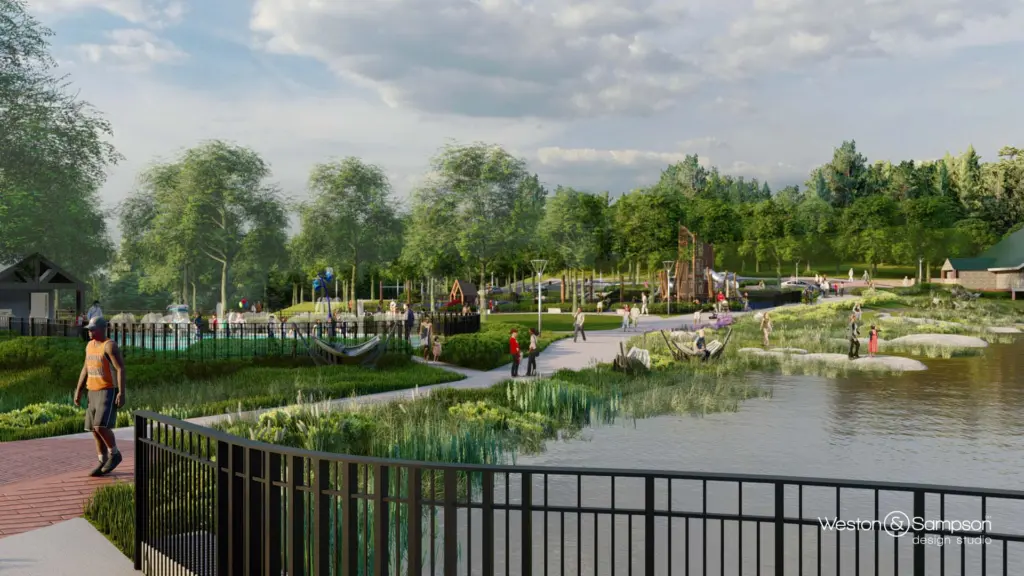
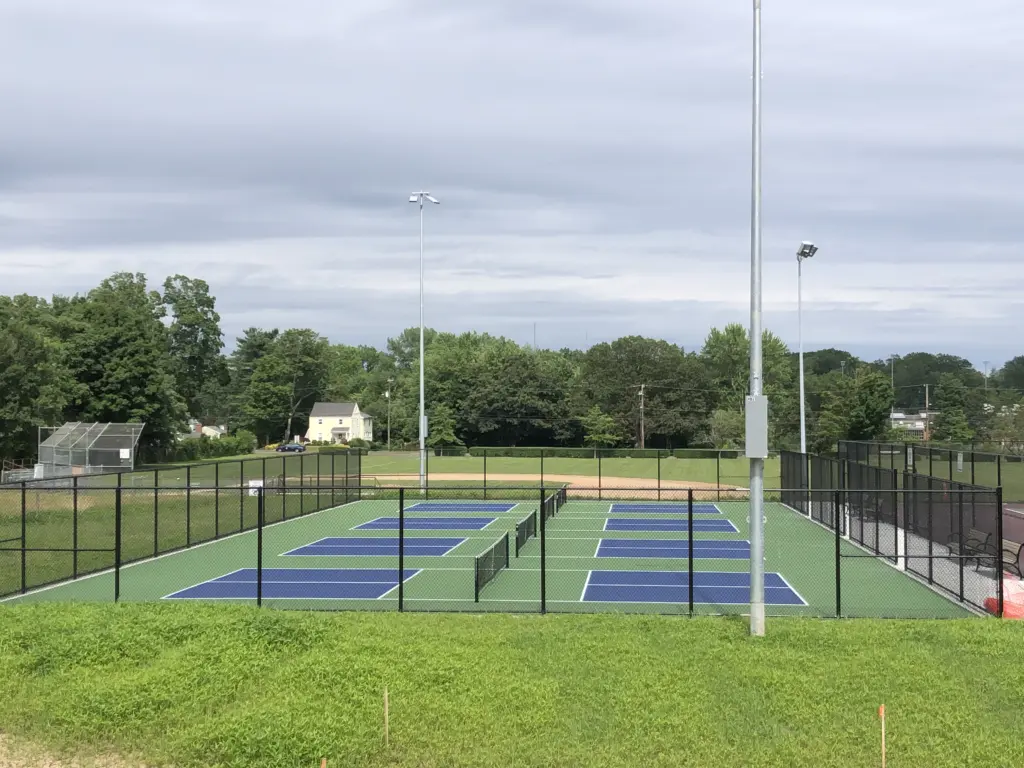
In the final months of construction, the tone shifted noticeably. More people returned to the park, testing new trails and using the space in ways we had hoped. • Families navigated accessible routes with strollers. • Older adults moved comfortably along improved paths. • Disc golfers finally had a designated parking area. • The fishing pier welcomed users of all abilities. • Pickleball courts became active gathering spaces for all ages. • Joggers and dog walkers enjoyed the restored wetland areas. Suddenly it seemed, the park began to feel like a shared accomplishment shaped by both design intent and community participation.
Lessons for Emerging Professionals
Being an entry level designer is not a limitation – it is a vantage point. Early in my practice, I learned quickly and broadly, from technical details and coordination to communication with all stakeholders. Through the transition from design to construction, I learned that precision matters. Spot elevations at transitions, accessible slopes, curb reveals, and drainage paths are not just numbers on a plan – they directly shape how people move through and experience space.
Being an entry level designer is not a limitation – it is a vantage point. Details carry subtlety, and subtlety carries impact. Lessons are often learned incrementally, through repetition and observation, rather than through singular moments.
Details carry subtlety, and subtlety carries impact. A grade that makes a path feel effortless, a bench oriented toward activity, or planting that frames a view can quietly support comfort and dignity. Good design does not announce accessibility; it allows inclusion to feel natural. These lessons are often learned incrementally, through repetition and observation, rather than through singular moments.
Page Park did not transform in a straight line. It moved through iterations, reviews, seasons, and conversations. The process required patience and rewarded persistence. It was shaped by hundreds of small decisions and by a team willing to learn from the site and from one another.
As an emerging professional, I came to understand that landscape architecture is not only about shaping land. It is about shaping experience and belonging. When a design is reflected in a place where people feel welcome, connected, and proud, the work has done what it set out to do. Ying Zhang is a Landscape Designer II at Weston & Sampson’s Design Studio in Rocky Hill, Connecticut. She can be reached at zhang.ying@wseinc.com.